
Subhas Mitra :
Linguistic identity overlooking cultural and geographical entities is ‘taking the sheen out’ of Hindu Bengalis. Still, they relate themselves more closely to Language than religion?
Why and How?
The entire East of Magadha and North East India became Buddhist. Their Ahimsa (nonviolence) made them surrender to Islam even before they could understand it. At this junction, Richard Eton finds Hindus and Muslims on the same page. The Ashraf Imams / Maulavis did not know local languages, for them, Indic languages were Haram and there was NO ISLAMIC language like URDU. Ashraf used Persian/ Arabic script but used the language of their own like Persian, TURK, PUSTU, USBEK, ARABIC, etc. (The same thing happened for Churches in the South before English became their common language). Here comes the secret of why Bengali’s love for language is closer to heart than their religion. Bangladesh was born out of it, after sufficient torture and subjugation from Urdu and Punjabi-speaking Muslims. Former Pak PM Zulfikar Ali Bhutto used foul language toward Bengalis even in Parliament.
Bengalis are the 2nd largest Muslim community in the world after Arab thus Bangla is the 2nd largest Islamic Language.
The religious background of Bengal.
Hinduism:
I think that Banga Raj fought the Mahabharata war for Kauraba, probably because of political consideration but it could also mean they preferred ‘flying in flocks’ or avoided the risk of taking the innovative strategy of Pandavas. My observation, without empirical evidence, of the behavioral pattern of Local people from 750 AD to 1971 suggests Individually there were many extraordinary talents in composing Puranas, Saodagar (business entrepreneur), Mathematicians, and scientists but in public life and administration, they are emotionally moved, sentimental, risk-averse and suffers from lack of foresight. Very accommodative, honest, believe anything and anyone ‘new’ without doubt/apprehension or verification. Most are contented people with a lackadaisical attitude.
It is natural to believe that Sanatan Dharma prevailed in Bengal when Buddhism came (as evident from archeological findings) but history tells us Buddhism was the FIRST Organized religion in Bengal before which there were primitive beliefs with tribal /locally innovated deities. Actual Hinduism evolved after Sen Dynasty. Cholas rule in Bengal did not last even half a century.
During this study I discovered THREE types of Hindus in Bengal (maybe everywhere):
1.Ruler’s assets: Opportunity seekers / Invaders friendly: whenever whoever has ruled this class has run to them and submitted to avail opportunities and benefits. They are very intelligent, greedy, and selfish. Made name fame and money. They are sycophant ( হ্যা, মহারাজ পুকুর কাঁত / ব্যাকা )।
2.Idealistic but excessively emotional: They never surrender, they revolts and try to bring changes for the mass but their IDEAs are often detached from ground reality and cultural base. Some have given up everything for people but no one bothers.
3.Very protective & introvert (আপনি বাঁচলে বাপের নাম / पहले आप, बादमे बाप ).They are Obedient to their ‘providers’ but not sincere to anyone outside the family. Often they are a salable lot. Anyone can lure them and use them. Cannot and do not want to see beyond their nose.
(No.2 and 3 were self-dependent)
Islam in Bengal:
All the Ashrafis had to greet TWO types of Muslims.
1. Newly Tonsured headed (পাতি নেড়ে / पाती नेड़े) meaning became Buddhist nely but could not stand Islam, so converted even along with their monastery en mass, particularly delta region of Eastern part.
2. Converted out of fear (শুনে মুসলমান / शुने मुसलमान ) meaning became Muslim on hearing that KALAPAHAD is coming for force conversion they converted out of fear. Mostly in western parts of Bengal and Orissa /Bihar. Bhurishreshtha’s (modern Howrah-Hooghly) Maharaja Rudranarayan Raymukhuty ‘s brother and General Rajiblochan Ray married a daughter of Gaur Sultan and made her a Hindu but when the couple was not allowed to worship at Jagannath Dham ( a noted Hindu pilgrimage center) he became furious, converted to Islam. Some historians believe he made more Muslims than Aurangzeb.
(Any parallel with C R Das- 80% reservation, Jyoti Basu – Partition demand before independence & then economic refugees, Mamata Banerjee – Milking cows? I don’t know).
Since ASM (Ashraf Muslims) did not know Bangla they could not make all converts anti-Hindu. During the entire Islamic rule, there was no Madrassa outside the “FRIDAY school” in Mosque. First Madrassa was opened under Warrant Hasting in Kolkata but Bangla entered there in 1936 by AJM Fazlul Haque.
The dilemma of language in Bengal:
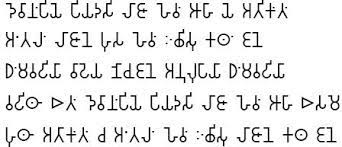
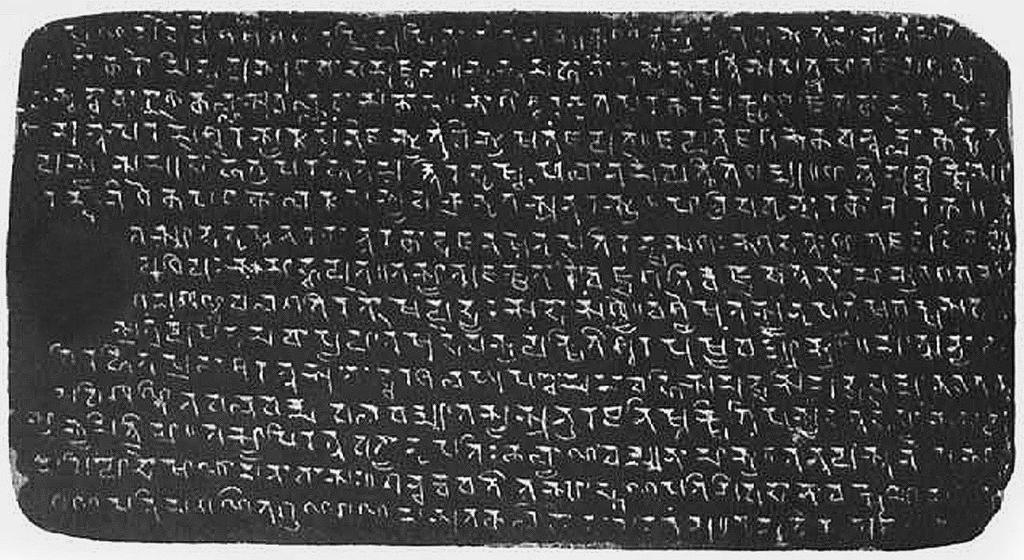
We know that Rishi Panini did not invent Sanskrit but he formed the Grammar through which he innovated, renovated, cultivated, and modeled a system that brought all the existing 1000s of languages on a common platform without any contradiction among speakers. It acquired even Indo-European acceptability but Buddhists wanted to walk out. They tried their hand at Prakrit, Pali, Nidanpuri, etc., and the script of NE ( Nagamese script which the Church changed to the Roman script during the Nehru era). In Bengal, they took control of the Nidanpuri script (one out of a few others) and propagated their thought in CHARYAPADA চার্যাপদ (CP).
Ruler’s role:
Muslim invaders (Ashraf /ASM) encouraged and promoted Bengali probably for TWO reasons.
1. They came from a nomadic background and found sons of soils are deeply attached to the soil. Thus to prolog rule, they must come close to locals by adapting culture and Islamizing it.
2. They hated Sanskrit and found learned men, Buddhist, Hindu or convert, were Sanskrit oriented. They wanted to break this by promoting Bangla and killing Sanskrit.
Conventional History project Shasanka as the First Bengali ruler of Gaur ( Maldah) but Muslims (Banglapedea) call him an outsider and a real Bengali was one Gopal Chandra who ruled for 75 years from 525 AD. Thereafter Bengali ruler was KSHETRA MALLA from 590-625 AD till the arrival of Bakhtiar Khilji in 1203.
{History Bengal and Bengalis in Banglapedea, Wikipedia, and Britannica differs. I could not find any Indian Bangla site}
How Bengali got independent Language status:
16th century A.D. not only in the east but also in the south, Mahabharata was translated first into Bengali and then into Assamese, Oriya, Telegu, and Kannada.
Sultans of Bengal engaged Hindu Pandit in their court to improve Bangla. Thus except for Islamic religious terms, all Bangla remained Sanskrit zed (even up to Mir Musharraf Husain) which was distorted after the formation of Muslim Leagues by the British & ASM.
According to Dinesh Chandra Sen, it was a Muslim ruler of Bengal, Sultan Nusrat Khan or Nasir Khan (1285? -1325) who commissioned the first translation of Mahabharata in Bengali named “Bharat Panchali. Major General S.K. Sen suggests that the reference may be to Nasiruddin Nusrat Shah (1519-1531 AD) who succeeded his father Sultan Hussain Shah of Bengal (1493-1519 AD.
There were others too who sponsored Ramayana translation in Bangla. There were Dara Shiko types of Muslims too.
FIRST Bangla poet:
As per Bangladesh, Sufi poet Nur Qutb Alam was first in the 11th century though Suniti Kumat Chattopadhya believes Bangla work started in the 10th century but Hindus spoke Bangla but worked in Sanskrit even up to Chaitanya Mahaprabhu (Krsna-Caitanya-Caritamrta c. 1513 or 1536–1540 in Sanskrit).
The poet Nur Qutb Alam established the “Rikhta” tradition which saw poems written in half Persian and half colloquial Bengali. The invocation tradition saw Bengali Muslim poets re-adapting “Indian epics” by replacing invocations of Hindu gods and goddesses with figures of Islam. { this tradition was accepted by both communities and rendered as ( কবি গান, জারী গান, বাউল, ভাটিয়ালি ) folk culture and lives even these days where Shah Abdul Karism wrote KRISHNA devotional song and Vijay Sarkar ( his son is active) wrote entire Sufi, Shia as well as some Salafi schools lore.
Chittagong, born, Abdul Hakim completed SEVEN Bangla books on Islamic subjects in the 1690s when Hindus wrote in Sanskrit though spoke Bangla.
Muslims came close to Hindus because of Ashraf distance, Badu Chandidas, Shri Chaitanya (had many Muslim gharwapasi followers) and Nur Alam, Abdul Hakim, Shah Muhammad Sagir, who translated “Yusuf and Zulaikha” refers to a medieval Islamic version of the love story of the prophet Yusuf and Potiphar’s wife which has been for centuries in the Muslim world, and is found in many languages such as Arabic, Persian, Bengali, Turkish and Urdu (WIKI).
Hindu-Muslim relations could be described as “Rulers and Subject” during the Muslim era but the British tried to make it “Master and Slave”.
Conclusion:
The greater an object’s mass, the greater its gravitational force. If demography is a ‘mass’ we have to learn from Jews how to withstand/check the Gravitational force.
এও (a bride) নাচে রঙ্গে ঢঙ্গে,
নাড় (widow) নাচে তার সঙ্গে সঙ্গে ।
Translation: A newlywed lady is dancing and merrymaking to welcome her husband,
While the old window imitating (instead of caring for children’s identity)
Image: Nagamese, Nidanpuri

 subhasmitra.co.in
You must be logged in to post a comment.