
Subhas Mitra : 23 Nov 2022
No one in all India services can divide the Indian panorama into communities, languages, or religions but unfortunately British brought us up exactly in the same way. Last few decades Mumbai film industry has been projected as KHANWOOD as if without them a film was unimaginable. I think from 1775 the British noted how influential Bengali Hindus volunteered to become EIC employees as a status symbol. British trained them and promoted them as most SUPERIOR people as most FIRST (doctor, engineer, pilots, Train Drivers) in colonial India was from Bengal. Eminent journalist Barun Sengupta described this superiority as a Myth in The Illustrated Weekly of India at the end 1960s.
Bengal’s history is replete with instances of grand voyages by prominent merchants/’saudagars’/’baniks’ like Chand Saudagar and the many merchants named ‘Dhanapati’ and ‘Lakshapati’ in famous Bengali ballads and folk-tales-the names indicate how wealthy they were who traveled from country to country and from port-to-port on trading expeditions buying and selling and making fortunes.
After such people preferred to be employees, they sought to impress their foreign masters by emulating them and trying to attune existing Bengali culture to accommodate foreign values and practices until most characteristic features either degenerated or got forsaken in the name of ‘modernism’.
Some Bengali youths strove to bring about ‘social reform’ by introducing practices like forsaking the turban and shawl, which formed an integral part of classical Bengali attire’ so that their English masters would find it easy to give them jobs as ‘yes-men’ and ‘petty clerk’(Babu) in the offices of the Englishmen. How the Saree was to be draped by women was also significantly influenced by these budding reformers. Naturally, at this time, few people were willing to take risks and go forth with business ventures at the risk of earning the wrath of their British masters. The ones that sought to continue had to find other ways of preventing British intervention in their business(by keeping them at bay with gifts and tributes) and were immediately labeled ‘sycophants’ or ‘burgeois’ by competitors, critics, and friends. Communists took over after Independence. Bengalis grew more docile and started shying away from any venture that involved significant risks/investment. In its place emerged a ‘middle class that preferred passing examination after examination, studying hard, and securing jobs and civil services to make a living for themselves. Even today Bengalis are not able to get out of these mentalities. Even the most intelligent student also wants to rent their asset than taking risk of entrepreneurship.
Whatever they earn during 300 years, Communists brought it down within 30 years. Intelligent students got more frightened.
The arrival of Marwari in Bengali’s life:
Marwari seems to have begun arriving with Rajput Army in the 17th century. One Jaswant Singh and his son were appointed Viceroys of Bengal by Emperor Akbar and Jahangir. They also brought several trading communities, from Rajasthan. The pure Marwari of Rajasthan belonged to several socio-religious groups, such as Agarwals, Maheshwaris, Oswals, Khandelwal Vaishya, and Porwals.
About 1668 AD “malguzar system” (introduced by Marathas but adopted by Muslim rulers) was introduced in Bengal as securities from the revenue of farmers & later Zamindars and Taluqdars (introduced by Lord Cornwallis). Marwaris were its principal beneficiaries. The “jamini business” reached its peak in the early phase of British rule.
Before that “Nattukottai Chettiars” (who came to Bengal during the short span of CHOLA rule), had a monopoly business with Arakan ( Akyb, Rakhine of Myanmar) trade with Bengal. Hazari Mall of Murshidabad and Dulalchand Singh (alias Dulsing), a Porwal took Dhaka, and Kumilla while Jagat Sheth, an Oswal took up banking and financing of the entire Bengal, Bihar, and Orissa.
Lakshminarayan Rambilash was in HUNDI, Tarachand Ghanshyamdas, Bansilal Abirchand, Sadasuk Gambhirchand, Harsukhdas Balkissendas, Kothiwal Daga, and Ramkissen Bagri, dominated the indigenous money market.
Some Marwaris Rajputs took two different roles, some continued to rule where it was possible. A few became Jaminder ( Narayanganj near Dhaka under Bengal ruler Isa Khan) in Bengal and joined the Barobhuiya confederation. Some took up the business but continued their unique Rajput & Marwari identity. While some adopted unique identities like the Ostwal Jains of Murshidabad, they call themselves “Sheherewals”.
It seems they assimilated completely with the local culture most probably via marital relationship. They had been a separate colony near Sonargaon called ‘Panam Nagar ’, which is now a historical & tourist place. It was a very important place for BARO BHIYAN. Ref: Lutfullah Hussain Pavel. wrote in Prothom Alo (in Bengali) Dhaka.
Unique & common surnames/titles among Bengalis and Marwaris were found there like Poddar, Sardar, Bhuiya, etc. Sonargaon Folk Art and Craft Museum of Bangladesh is still housed in the ‘Poddar House’ that belonged to Ananda Mohan Poddar, both communities claim him as their own.
Muslim Era in West Bengal:
1777 AD Nawab Mir Qasim sought Marwari help in implementing his plan for rebuilding his army. Jagat Sheths refused. Subsequently, the Marathas were invited by invader rulers but did not provide provisions; they started raids (as Borgi). At that stage, Muslim royalties resorted to pulling Marwari closer to them, Hindu Royalties too did the same but they sided with Hindus.
During the British opium and indigo trade in Bengal was financed by the Marwaris. Then came Tea Garden, Jute, etc. and their scope increased many folds.49 out of 74 Jute estates belonged to Marwari. They were instrumental in financial and economic including HUNDI (&Banking) activity at Murshidabad, Kolkata, Dhaka, Chittagong (foreign trade), Cumilla, Sonargaon, & Mymensingh.
In 1830, the bourse (stock Market) activities in Kolkata were conducted under a Neem tree by EIC but its loan securities were undertaken by Marwari.
British cleverness and Gandhi effects:
Biblical divide & Rule entered the Marwari household. They had to side with someone this time.
One was highly orthodox in religion and believed in a nationalist ambiance with traditional trades. Another became largely pro-British (that included Bong upper-caste mostly Brahmans) with British firms. Ghanshyam Das preferred/sponsored Arya Samaj.
Dwarkanath Tagore’s Opium & Indigo was financed by Sevaram Ramrikh Das and Tarachand Ghanshyam Das.
1929 economic depression, 1943 Famine, and 1947 Partition forced many Marwari to shift to West Bengal but many preferred to stay back. After the 1964 and 1971 Hindu killings, only 700 Marwari families stayed back.
GD Birla supported M K Gandhi who is believed to have engineered the shift of the British Industries and trading houses to Marwari communities. Bengali Executives of British firms who looked down upon Dhoti and were proud to be English employees became Non-English speaking Marwari Dhoti Walla’s employees after the partition of India in Calcutta.
Communists projected Marwari as an exploiter and insulted West Bengal’s Annadata ( provider of food) of local employees and one of the descendent of Kolkata’s indigenous industry pioneers on a public road.
But Marwari proved cleverer than WB Govt.’s ruling party. When the party converted the entire Govt. Hospitals as party offices, Marwari got private Hospitals and Nursing homes as new businesses. When English was removed from Primary schools, Marwari got another floodgate open up in English Medium schools.
Interesting point:
All the Chamber of Commerce in British India was formed by the British with Bengalis, but as of now, almost all are under Marwaris. Same to early Banks in Bengal was founded by Bengali Hindus but now except for Bandhan Bank, there is none with Bongs.
What happened to Marwari of EAST Bengal?
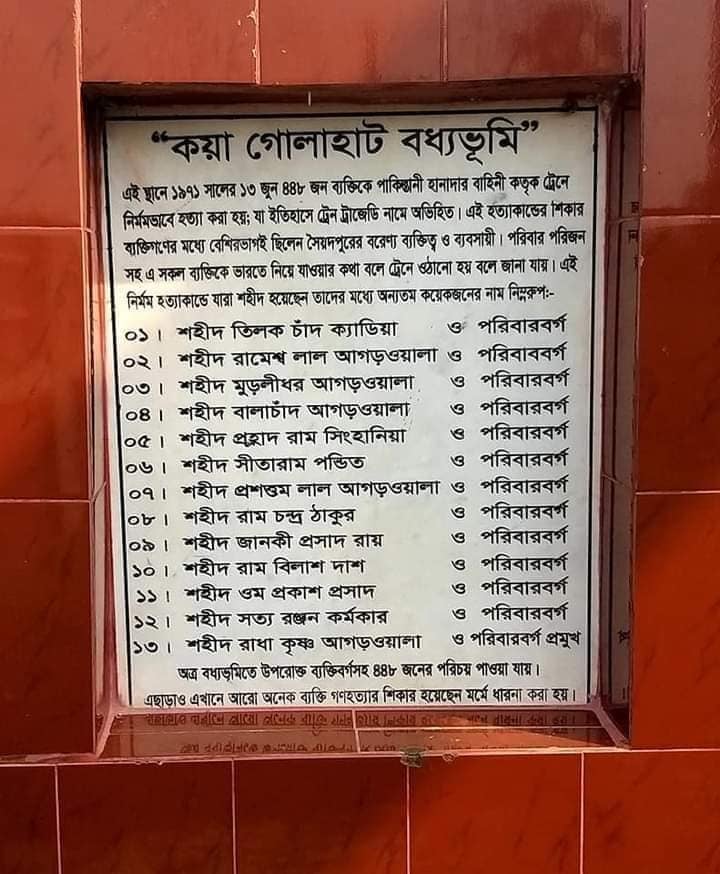
Syedpur Town of NILFAMARI district of East Pakistan had a sizable Marwari presence till 1971 that lived in sync with local Hindus. 28 March Army kills many Bengal Hindus and 12 April 1970 Army picks up Tulshiram Agarwal, Jamna Prasad Kedia and Rameswarlal Agarwal were moved to RONGPUR and killed.
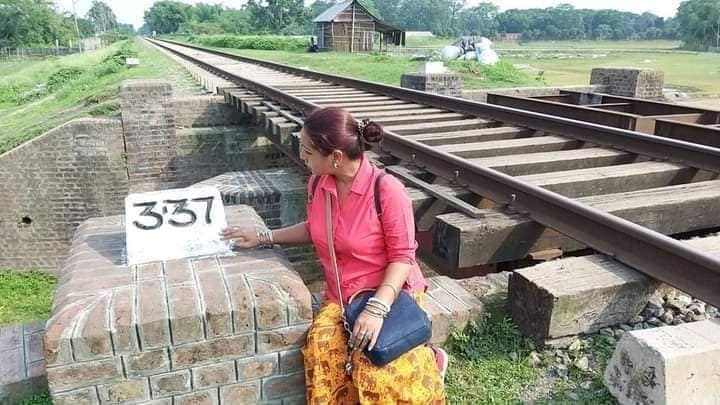
On 5th June they declared that all Hindus will be left near the Indian border by 13 June 1971 by train. All Hindus were asked to assemble at the station.
The train left with 437 Hindus at 10 AM. Next station, Muslim killers board with weapons (chopper, রামদা). The train moved, and every Hindu was killed before the next station.
The present Bangladesh Govt honoured them as martyrs.
This is Mamata Banerjee’s milking cows, Bhadralok’s Humanism, Congress’s secularism, and Communism’s equality with the irrelevance of religion.
Think who BAHIRAGATA (outsiders) in Bengal is. The entire Urdu speakers are Bohiragata as per Bangladesh consideration.
 subhasmitra.co.in
You must be logged in to post a comment.