
(8.3 Mnts read)
Subhas Mitra : 04 Feb 2023
Historical perspective :
Koduri Srisaila Sri Rajamouli (RajaM) is currently the highest-paying director in India. His distancing from Bollywood, the globally acknowledged Indian film city, deserves some introspection.
Is it because the Industry is taken over by people for whom Music, Singing, Photography, drawing faces, and performing art of impersonation (acting in a play, drama, and movie) are Haraam /forbidden? Although any haram becomes Halal Halal /Jayez if done as Da’wah (invitation to accept Islam) or as Halal deceit (they are six in numbers) and ZAKAT is honestly paid.
While people whose divinity is associated with KALA, i.e. arts कला in various forms (Sri Rama had 14 Kalas- Sri Krishna -16). No restriction of sensuality with 11 Types of Ras रस – (1) Shringar Rasa (2) Humorous Rasa (3) Karun Rasa (4) Raudra Rasa (5) Veer Rasa (6) Horrible Rasa (7) Bibhatsa Rasa ( 8) Amazing Rasa (9) Shant Rasa (10) Vatsal Rasa (11) Bhakti Rasa. ( 600+ Borkha rule put our women in PARDA). There are Rong रंग , Rupरूप, Raagas राग– Raginis रागिनी , Abhinaya (acting) –Nritya (dance) can be part of SADHNA / TAPASY (spiritual attainments). How are such people getting drifted away?
Is this Ras रस, presented as “Chemical Locha” in Khanwood?
Didn’t Kalidasa born before civilization-destroying invaders got in Bharatvarsha and write plays?
As much RajaM represent patriotic Indians so much Bollywood represent Indian movies, as entire Indian creative people gathered here after Capita shifted out of Calcutta.
RajaM carries a cumulative legacy since 1909, Raghupathi Venkaiah Naidu’s short films and in 1921, the silent film Bhishma Pratigna. H.M. Reddy’s bilingual Talkie (Tamil & Telegu) came in 1931- Bhakta Prahlada.
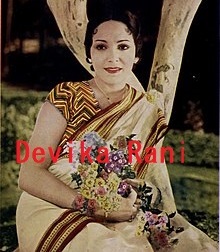
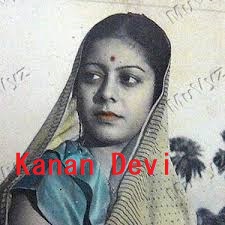
No cinema history can be written without Kolkata and its British influence:
Camera:
Get mentioned in China, around 400 BC, Iraq – Hasan ibn al-Haytham (965 AD-1040 AD) worked on camera. It isn’t easy to believe WIKI Bhaijan, how Camera became Halal in the 10th century when the printing machine was declared Haram in the 1440s by Ottomans?
However, Frenchman Joseph Nicéphore Niépc gave shape in 1816.
“Vageeswari cameras” were designed and manufactured by K. Karunakaran at Alappuzha, Kerala, in 1942.
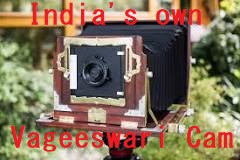
Nicéphore Niépce, in 1822 developed a technique called “heliography” which became photography, and K. Karunakaran was the First to give studio photography concepts.
Moving photography or video:
In 1888 in New York City, the great inventor Thomas Edison and his British assistant William Dickson worried that others were gaining ground in camera development. In 1890 Dickson unveiled the Kinetograph, a primitive motion picture camera.
First Indian moving cameraman was Ms Homai Vyarawalla, a Parsi Zoroastrian from Navsari, Gujarat.
World’s shortest film:
Roundhay Garden Scene, shot in 1888 by Louis Le Prince and dazzles. It was 2.11 minutes.
Longest: Experimental film “The Cure for Insomnia”, released in 1987 by John Henry Timmis, was 84 Hours.
Longest feature film: Cleopatra (1963) — 4h 8m.
Longest Indian film : Lagaan (2001) – 3h 44m.
Bioscope, Talkies to movies:
The Journey started in Kolkata:
Believe it or not: Bengalis played a vital role in developing cinema in India. It is a different matter that,
If Bengal Hindu’s civilizational roots were not weakened by Buddhist atheism (or Sunnyata), their sense of cultural uniqueness and pride was not have been shattered and diluted by Muslim aggression, atrocities and Daʿwah; they would not have surrendered to the British and submitted to the Church inculturation by compromising with cultural identity, present-day Indian’s North-South cultural divide and movie world would have been different.
The maturing process of Indian movies:

1. 1898 Hiralal Sen (1868 – 1917), born at Manikganj (not far from NOAKHALI secularism) started The Royal Bioscope in Calcutta –he made theatres, political movements against Bengal Partition & Swadeshi. Political activities and cancer drove him to financial hardship and death. In 2018, A film named ‘Hiralal’ has made about his life starring Kinjal Nanda by Arun Roy.
2. 1903 – Entire Sen Family makes FIRST fiction: Ali baba and forty thieves, directed by Joytish Sorkar. 1912 he makes ‘with our king & queen through India’.
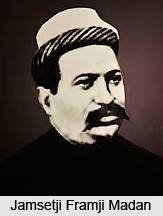
3. In 1902, legendary Jamshedji Framji Madan of Parsi drama came to Calcutta to make a film.
4. 1905, with Joytish Sorkar Hiralal Sen remakes Bengal partition as a silent bioscope and BILLWMANGAL ( Bhagat Surdas) in 1917.
4a . In 1909, Raghupathi Venkaiah Naidu made short films and in 1921, the silent film- “Bhishma Pratigna”.
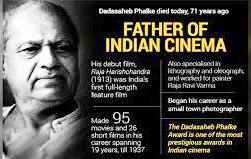
5. 1913 Dadasaheb Falke made the perfect silent movie “RajaHarishchandra”. He made 95 feature-length films and 27 short films in his career, spanning 19 years, until 1937, including his most noted works: Mohini Bhasmasur (1913), Satyavan Savitri (1914), Lanka Dahan (1917), Shri Krishna Janma (1918) and Kaliya Mardan (1919). ( required no Ali Baba or King-Queen)
6. 1931 Ardeshir Irani makes ALAM ARA and KALIDAS in the South with H M Reddy. H.M. Reddy’s bilingual Talkie (Tamil &Telegu) came in 1931- Bhakta Prahlada in the same year.
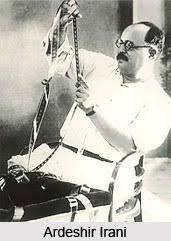
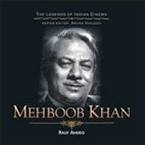
8. 1930s Mehboob Khan was brought to Bombay from Baroda by Noor Muhammad Ali Muhammed Shipra Baddhiyawala to work as a “horseshoe repairer” in his stable. One day at the shooting of South Indian director Chandrashekhar, Mehboob showed interest in working with Chandrashekhar. He worked with Ardashir Irani, too, before becoming a director ( the natural talent ). He brought Nurjahan & Suraya ( singers), Naushad ( Music dir) etc. and gave us Al Hilal (1935), Manmohan (1936), Deccan Queen (1936), Jagirdar (1937), Watan (1938), Hum Tum Aur Woh (1938) Ek Hi Raasta (1939) Aurat (1940) Ali Baba (1940) Bahen (1941) Roti (1942) Taqdeer (1943) Najma (1943) Humayun (1945) Anmol Ghadi (1946) Elaan (1947) Anokhi Ada (1948) Andaz (1949) Aan (1952) Amar (1954) Mother India (1957) .
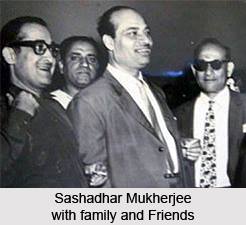
9. In 1943, the game changer S ( shashodhar) Mukherjee entered with ASHOK KUMAR –NASEEM BANO( went to Pak.) He Introduces Prithviraj Kapoor & KAPOORs.
How Bombay Filmalaya or Film City became Bollywood :
Around 1986-7 when Metro channel was new DD TV – there came a serial by the name MIRCH MASALA in which the word Bollywood was used as sarcasm. During NDA-I some journalists used the word to ridicule JAYA- MAYA- Mamata circus as TV show sarcasm and from them, this name came, out of the inferiority complex of our pen pushers.
First movies in other languages:
1. Guajarati: 1932, first Gujarati talkie, Narsinh Mehta by Nana Bhai Vakil.
2. Sindhi: The first film was “Ekta”- in 1940 directed by Homi Wadia.
3. Kannada: “Sati Sulochana” is 1934, film directed by Y. V. Rao
4. Assam ( Ahomia) “ Joymoti ( জয়মতী)”, in 1935,. Based on Lakshminath Bezbaroa’s play Ahom princess Soti Joymoti directed by Jyoti Prasad Agarwala.
5. Punjabi: Sound film: by Hakim Ram Prasad, the 1932 “Heer Ranjha, or Hoor Punjab”, but First Talkie was K.D. Mehra’s Sheela, also known as Pind Di Kurhi, in 1935.
6. Malayalam: The first film is“Vigathakumaran”made in 1928-30. It was produced and directed by J. C. Daniel
How the thrust to Bombay began:
The capital was shifting to Delhi; Bombay was emerging as financial capital because of not only cotton
Trading & Industry but also natural port made her an international city.
It could be these that made the following founders of the National Film (Hindi) industry contribute to the making of Humche Mumbai or Bollywood.
The Journey continued :
Hiralal died in 1917; brother Moti lal was struggling to overcome the loss from the divesting fire in their production.
Jamshedji Framji Madan CBE (1857- 1923)
Dadasaheb Phalke (1870 –1944) (Aptly called the father of cinema)
S (Sashadhar) Mukherjee (1909 – 1990) – “Filmalaya” was founded in 1956.
Bimal Roy – the Doyen of Indian Cinema (1909 – 1965)
Pankaj Kumar Mullick (1905 – 1978) was a music composer, playback singer and actor.
C. Ramchandra (1918 –1982), Music director.
K. L. Saigal (1904 –1947), singer and actor (He picked up Mohd Rafi)
Avichi Meiyappa Chettiar (1907 –1979)- producer and founder of” AVM” studio in 1931.
Himanshu Rai (1892 – 1940) & Devika Rani Choudhuri (1908 – 1994) Established Bombay Talkies in 1934.
Moti B. Gidwani: born in 1905 in Sind, director and producer known for Khazanchi (1941), Kisan Kanya (1937)
Uma Devi Khatri -Tun Tun ( 1923- 2003) comedian per excellence.
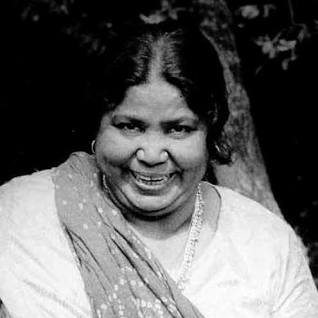
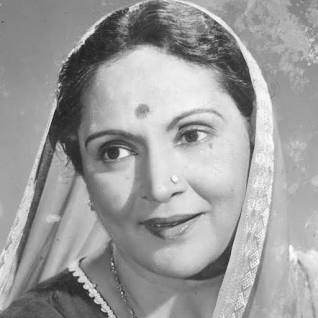
(Please note all these names: you may need them at the end of the article)
Here is a bit of Communal Talk:
So far, each person started their creation based on their cultural background and belief system, including Mehbub Khan. But Bengali Babu Hiralal Dada started with Ali Baba… King-Queen before Billamangal, directed by Rustomji Dhotiwala.
Now director Anurag Basu needs to show Tagore’s Hindu character performing Namaz. Bengalis are so Mahan.
With this background, we can note : Alibaba was not religious, but Al Hilal was. Still, Mehboob was not a Hindu hating communal/communists like Mahesh Butt/ Adur Gopalakrishnan/ Kamal Hassan / Mrinal / Aparna sen etc. But as his age advanced he too fell in anti-Hindu agenda influence . Mehboob and his team ( Mazrul Sultanpuri, Moh’d Rafi, Nausad) has even given many Bhajan that even today play in Temples. There was a time when Hindi and Urdu films used to be distinct.
During 1980s there was a trend to depict Sikhs as funny character of dimwit. Now I understand it might have been deliberately done to drive them to Turban Christian convert or Khalistan.
How Hindi movies turned into Urdu Movie in disguise:
Some historical landmarks:
AMU: Aligarh Estd: 1875 (2N Theory)
Muslim League was formed: in 1906
Malabar Killing: 1921 (British semi-mute)
Anti-Hindu Communist party began: in 1925
Lahore resolution of ML: (on 22–24 March 1940 – demand of Pakistan for Indian Muslims)
Calcutta Killing: 1946 (British entirely mute)
Noakhali Massacre: 1946 (Gandhi asks Hindus to run away or convert to Muslims)
Under such Hindu – Muslim relations, our film industry was growing.
Hindu Muslim Amity in Industry:
We know Lata Mangeshkar was groomed by Ustad Aman Ali Khan and promoted by Music director Ghulam Haider. This was in 1941-44, well past the revival of the Khilafat movement by MK Gandhi and the Hindu-Muslim divide.
There was a time no one asked the name of the Kawal / Gazal singer, but the Kawali/ Gazal was all that mattered.
Raj Bahadur Chunnilal (father of Modan Mohan), Ashok Kumar etc., never distanced from Muslims despite fresh riots in Lahore or Rawalpindi in those days.
It is difficult for me to say why Muslim artists had to take Hindu names to participate in the then-emerging Industry of personal caliber/skill/talent (now it has also become dynastic & reserved). Was it to escape a Jihadi attack for mixing up with Kafir and taking part in Haram?
Or
To participate in Da’wah (inculturation) via halal deceit?
I am not sure which out of the following SIX fits in the film industry:
1. . Al Taqiya (Shia) & Al Mudarat (Sunni):
2. Al Kitma or Qitma
3. Al Tawriya
4. Al Tahshir
5. Al Daraura.
6. AL Muruna :
(Learn directly https://www.shongshoy.com/references/islam/ ).
To my finding, even with Mehbub’s arrival Hindi and Urdu film used to be distinctly noticeable, and he started turning Hindi films into mixed Hindustani (Urdu). Could it be in Bollywood- Due to the rise of communism in W.B. / Kerala and Perriar Dravid’s influence in Tamil film has helped URDU make space in our national film circle)?
After the partition of India, it was expected that Bombay would make HINDI and Pakistan would make URDU movies.
Game changers:
Yaadon Ki Baarat (1973) is said to be the first Mashalla film by the Salim-Javed duo. Analytical stories are available on the net regarding the Salim-Javed duo’s creation (24 movies – 36 including remake) of Hindu Atheists, Muslim pious, Union leaders as Hero, caste quarrels/conflicts, 786 saves Hindus life, denigrating upper caste, Hindu ascetics and using bad words for deities in their movies. Some reflections are being noticed in the South also in recent days, probably because of hobnobbing with Bollywood’s disguised Jihadi with Hindu names.
Reverse Love Jihad movie “Bombay” in 1995 by Mani Ratnam created communal riots, but the end number of Love Jihad films goes without a whisper.
It is difficult for me to understand the Fatwa. A pork-loving drunkard, Ahamediya became the creator of an Islamic state –there was no Fatwa. Zeba Akater (after the movie Henna -1991) sang corrupted Ram Dhun (Iswar-Allah tero naam) with one out of 3 ex -Husbands, and they were reconverted to Islam. At the same time, Rubia Mohsin ( in the movie) has shown her panty colour in public but no Fatwa.
It is believed Dance (Kathak – Mujra), Baiji – Kotha (with Nawabi Jaam /alcohol), Harem, and Hizda are Haram but developed during their rule in India. I do not know how they were declared Halal.
Muslims with Hindu names:
Dilip Kumar – Muhammad Yusuf Khan
Ajit – Hamid Ali Khan
Madhubala – Mumtaz Jehan Dehlavi
Arjun – Firoz Khan
Meena Kumari – Mahjabeen Bano
Johnny Walker – Badruddin Jamaluddin Kazi
Jayant – Zakaria Khan (Father of Amjad Khan / Gabbar Singh)
Jagdeep – Syed Ishtiaq Ahmed Jaffery ( son is an Islamist)
Nimmi – Nawab Banoo
Shyama – Khurshid Akhtar
Sanjay – Shah Abbas Khan
Haji Mastan Effects :
It is widely believed that Sarad Power groomed Dawood Ibrahim. Dawood joined the gang of local gangsters and don Baashu Dada, part of the locally organized crime syndicate in the 1970s after the Haji Master era. Sarad Power became CM in 1978.
Dawood had nothing to do with ART, CULTURE, MUSIC or FILM but this one man held responsible for turning Mumbai into a sole URDU film. It is believed by many film critics that there is no HINDU of “Dawoodwood” who does not take pride in attending his DUBAI Darbar for blessing and ….warming. ( BigB to Akshay or Dipika to any …Ka)
He has changed the meaning of JIHAD. Jihad is usually war or violence, but he took up “Nonviolence Jihad”.
Points to Note:
1. Movie characters are Hindu, but they sing – Allah Rasul Khada songs at home.
2. Even Hindu – Sikh lyricists write such songs.
3. Temple, Bhajan, and Dhoti are entirely out of the film.
4. FOUR wives for Hindus also justified by Muslim directors with all Hindu artists “kis kisko pyar karu”
5. Overseas distribution of our movies is in many Pakistanis’ hands due to the Dubai effect.
6. Most mega M artists’ foreign “events” are managed by Pakistanis or their affiliated Muslims. This is secularism.
7. Remember the death of Divya Bharati?
8. South Films with Hindu backgrounds dubbed with Islamic terms: like Halal –for Bali बली, Kaboristan for Shamshan, Duwa – Ashirvad (it is countless- observe yourselves)
I hope you know why Gulshan Kumar’s murder by Muslim colleagues is NEVER related to the SSR case by any media house.
Probable reasons:
The Nehru-Gandhi-Jinnah effect changed Muslim’s liberal attitude. Entire female artists used to be Muslims. Not from decent families, but as the PARTITION of the country neared, Muslims took Hindu names and acted.
I presume congress was not happy –they and some Muslim clerics might have revived the term Ganga Yamna Tehzib, which is nothing but an EGG of a HORSE (a Bangla proverb). Thus there came the Film & Television institute in 1960.
Film and Television Institute of India (FTII) :
1960 – FIIT formed and two successive heads were from AMU (Anwar Jamal Kidwai ) & Jamia Millia (S M H Burney ) who had nothing to do with arts, theatre, drama or any creativity. It could be that they brought the “Movie Jihad” in our films.
After that, leftists took over. U R Ananthamurthy (2005 – 2011) was held HIGH for his atheist Credential by peeing on his Kuldevta (presiding family deity).
This institution was designed on:
The International Association of Film and Television Schools (French: CILECT) is the association of the world’s major film and television schools. It was founded in Cannes in 1955 at the proposal of Marcel L’Herbier (IDHEC President) and Rémy Tessonneau (IDHEC General Director), who gathered together for the first time higher education film school representatives from France, Italy, Poland, Spain, the U.K., USA and USSR.
Do we share any common cultural inheritance with them? Couldn’t our institute develop indigenously? Was adapting them was only way to improve?
All these happened under the national guardianship of one who wanted to retain a British Military officer as Chief of the Army staff as he had no confidence in Indian Brown officers.
Naatu Naatu Award:
An author friend of mine on SM believes that this creation of Kala Bhairava, M. M. Keeravani, and Rahul Sipligunj got the award because there are Caucasians shown in it, the shooting is in a European background, and the synchronized dance sequence was an improved form of old Charlie Chaplin dance.
But I can’t entirely agree with him as I am not an expert in such subjects and am fully confident in our home grown talents.
The FTII effects:
1. Institutional denigration of Hindu values and unity through the film, which reaches the last man in the line.
2. Hindi films made on Dawood Ibrahim’s sister as icons. Anti- Hindu goons with Hindu names dominate; bring Pakistan artists, film to highlight Pakistani views on lingering disputes.
4. Kabir and Ayesha, like Arab names, are given to Hindu characters, and Hindu celebrations/ rituals are LOADED with Islamic / Urdu lyrics songs.
5. There is hardly any talent hunt. It is nepotism and Muslim’s proximity. Any Urdu-knowing jihadi /communist can become a lyricist.
6. Technological advantages, including A.I., have given power in the hand of moneyed people to manipulate and instil talent in any of their chosen ones.
We can only hope the trend does change with time.
 subhasmitra.co.in
You must be logged in to post a comment.