
(Bankruptcy of Self-Esteem of Colonial Indians)
Subhas Mitra : 17 Aug 2024
Decolonizing Hindu mind:
(Most ex-Hindus love their Arab/European imitation)
Military ships /establishments have a routine inspection by senior officials from time to time. During one such inspection by a British officer on board an Indian Naval ship, the officer went to the kitchen.
He pointed to a utensil and asked:
What is in it?
The cook replied:
Yesterday’s milk today sir
Officer: what does that mean?
Cook says: sir,
Milk sleeps at night, morning gets up tight.
It is not the cook who was ashamed of calling DAHI (card/yoghurt) but in those days even the ship’s Captain felt below dignity to use native languages.
We have lived so till 2014.
As of now, things are improving but inside India, some citizens consider such decolonization of mind as retrograde or regressive particularly, the Harvard fraternities and their employees and franchisees.
However, the younger generation is eager to discover their roots but the education system has been badly neglected during the last ten years in that direction. Vocational skill development is as important as self-esteem, confidence and the aim of self-dependence.
Our slavery is not merely political or administrative but language, mannerisms and etiquette also contribute.
Every native vocabulary has its civilizational significance and every Abrahamic word has its theocratic attachment.
Our mental subservience won’t go until we use our own language for expression.
Certain factors need public awareness:
Let us look into Greeting and condolence.
Greeting:
An intellectual encounter that raised this question:
I once attended a book release ceremony where I interacted with about 20 authors (mostly nonfiction writers).
Each one who spoke on the occasion exhibited an attitude as if
“We are no less than others”
(Former colonial masters). Whereas, I wish all our authors of the post-colonial era should think
“We are what we are”.
Meaning, we must be free from intellectual submissiveness or compromise to prove ourselves. We do not need accreditation, approval, or certification from our former masters or for that matter none other than his or her readers and critics.
That is the difference between an Author and a reporter or chronicler.
Haven’t we seen what a Booker’s Award or Nobel Prize can do?
However, they know better than me.
My another observation was my inability to appreciate their beginning of the function withশুভ সন্ধা शुभ संद्य good evening and ending with শুভ রাত্রি शुभ रात्रि .
I could understand the Convent school background of the moderator, where from a tender age Abrahamic mannerism has been implanted.
But if no one points it out this will go on forever.
That is not expected.
What is Good Morning- Good Night?
The word “good” is derived from Old English “gōd,” which in turn comes from Proto-West Germanic *gōd and Proto-Germanic *gōdaz. -, meaning, “to unite” or “to be drawn together,” indicating positive qualities associated with worthiness and value.
These words have their theosophical use also. GOOD FRIDAY is “good” because of the religious significance of Jesus’s death on the cross was the ultimate sacrifice for humanity’s sin.
GOOD SATURDAY commemorates the day Jesus Christ lay in the tomb after his death.
Sleep is a temporary death and biological death is permanent in Abrahamic faith therefore GOOD NIGHT could be a goodbye and Good Morning could be a beginning but what about other parts of a day?
Are we same?
Sanatani’s death is not an end of life which is ‘in cycles’ thus what do we have to do with those colonial etiquettes?
A Christian newborn is a sinner because Adam ate the apple, asked for Eve and consummated her but our every deity has a distinct gender and progeny. Every Sanatani child is born a pure soul (a Narayana / God incarnate).
A Muslim newborn is born defective and has to correct Allah’s defective work by performing Circumcision and FGM.
Wishing at other parts of the day:
We know in the Abrahamic world except for the almighty, no human is permitted to bless thus they can only pray for fellow believers. Sananis have no such restrictions. we can bless anyone irrespective of whether one belongs, to my religion or not.
These ‘Parts of a day’ wishes could be a type of ‘mini prayer’ for a believer’s goodness for that particular time.
Do we need to remind ourselves of our sins or correct some manufacturing defect and express gratitude at various parts of the day when we have ‘Pranam’ and ‘Namaskar’ to express everence/greetings?
For Sanantis time is KAAL ( কাল – कल -). It can be a noun, adjective or adverb. Since time is endless we say perceivable present period AAJ (আজ–आज ) and beyond perception or unknown is KAAl ( কাল –कल )- past or future.
Our philosophy and outlook towards life or time ( कल –কাল) does not match with the Abrahamic way of living a life.
Examples of Abrahamic and Saatani ways of looking at life:
God is the author of life (Genesis 1:27). In Islam, it is the Mercy of Allah. Is there any concept of KARMA?
No.
{In my book INDIA BEYOND NARRATIVES pages 269-276 I have explained concepts of LIFE and AFTERLIFE of all the known civilizations (living or put to death) on the earth.
Wishing for ‘Part of a Day’ could have its origin in Abrahamic philosophy (Theosophy).
Like :
- Life is uncertain even for a moment.
“Hasrat Jaipuri” wrote song:
Zindagi ek safar hai suhana ,Yahan kal kya ho kisne jaana.
ज़िंदगी एक सफ़र है सुहाना
यहाँ कल क्या हो किसने जान…
Sang by: Kishore Kumar.
Or
- जिंदगी ना मिलेगी दोबारा………
Zindagi Na Milegi Dobara…………
These are DAW’AH (Islamizing Hindu mind) songs. Such philosophy drives our youth to only sensual enjoyment as ultimate in life.
They are not told that your KARMA can shape your destiny.
What is Sanatani’s outlook towards life?
ज़िंदगी प्यार का गीत है : इसे हर दिल को गाना पड़ेगा .
ज़िंदगी ग़म का सागर भी है
हँस के उस पार जाना पड़ेगा…………..
Zindagi pyaar ka geet hai, ..Ise har dil ko gaanaa padegaa…
Zindagi gham ka sagar bhi hai..
Hans ke us paar jaana padega
Lyrics: Swan Kumar: Singer: Lata Mangeshkar
We can imagine how two different philosophies work on our youth. Such effects can originate from those small Abrahamic etiquettes also.
- The song “One” is an enticement to “frustration” in life because no amount of external enjoyment can satiate one’s desire.
- The song “Two” induces a sense of resilience and responsibility to cope with one’s given situation.
Greetings:
How a Jew greets a fellow: ‘Shalom alekhem’ (‘Peace to you)
Muslim greets a fellow: As-salaam alaikum means Peace be upon you.
How do a Christian greets a fellow believer:
a. “Praise the Lord” – as per the Bible
b.“Grace and peace to you in the name of Jesus Christ” by St. Paul
Secular greeting:
a. Arabic greeting: Marhaba (welcome)
b. Adab / آداب / Nastaleeq: Paying respect (in subcontinental Urdu-speaking people).
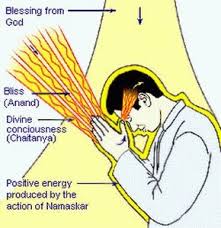
c. Namste or Namaskar – Vaṇakkam are non-religious Bharatia greetings and a way of paying respect though in Yoga Shastra a Namaste with yogic posture is different.
प्रणाम नमस्कार வணக்கம் !

Pranam is derived from the Sanskrit words “Pra” (before) and “Anama” (bowing). Pranam also has gestures, like touching feet by hand to show the ultimate respect to the Guru, Elderly, Parents, Respected Persona etc.
प्रणाम is a Sanatan procedure while नमस्कार / Vanakkam or any other Indian vernacular terms in use across the subcontinent is a purely non-religious way of paying/ showing reverence to another person.
- Namaskar is made up of the root words ‘Namas’ and ‘Kara’ (doing), and ‘Namaste’ is made up of Namas and Te (to you) in an Anjali Mudra.
- ‘Namas’ means pay/make reverence श्रद्धा while ‘Namah’ means ‘not me’ or ‘about me’ but my gesture, action or intention of reverence.
We are yet to come out of colonial inferiority implanted from our childhood, thus in media/ public gatherings, we use Adab, Good “this or that time” etc.
Here is condolence:
RIP – Rest in Peace
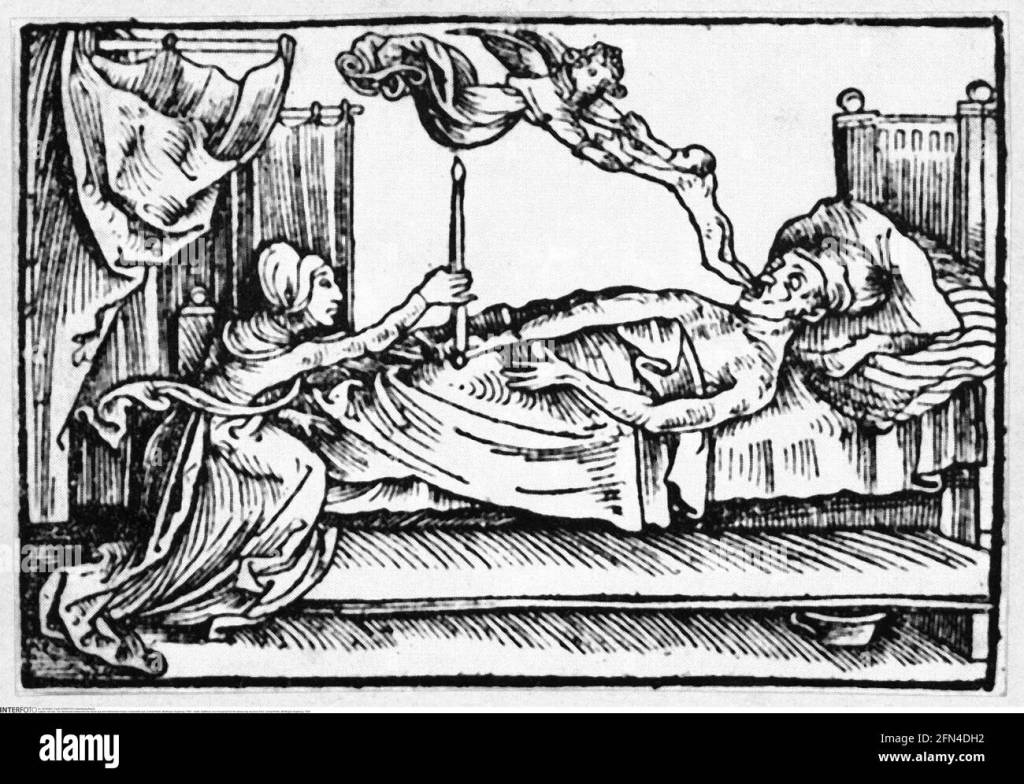
Some Hindus still use this adage or prayer that was made popular during British India.
To whom are we wishing to rest and for how long and why?
In Abrahamic belief Life force, Soul or Ruh inside a body is ‘life’ and its departure is ‘death’.
For Sanatanis, the Soul (Atman) is part of God (the Paramatma) but for them, Ruh or the soul is the ‘Mercy’ (creation) of God, not God or Allah. This mercy has to return to the body (kept in the grave) on the Day of Judgment / Qyamat ka din (for resurrection).
On that ultimate day, Jesus would sit and vouche who would go where – after that.
An Imam who leaves a chit in the grave of a dead Muʾmin ( مؤمن). , vouch for that Ruh.
So pray for a peaceful rest in the grave as RIP. It is perfect for them.
Although a Muslim would say:
“Inna lillahi wa inna ilayhi raji’un”, meaning “Indeed, we belong to Allah, and indeed, to Him we return ( post Qayamat).”
Muslims say so upon hearing that someone has died.
For Sanatani’s :

Pran is a Force (life force- वायु) that is equal to the movement (Shiva / God) multiplied by Time (Yam), hence a departed ‘Force’ cannot rest. It can only have Gaati (movement). Therefore, there is no rest for Pran or Soul.
The body can rest but for us, the body is Naswar (perishable), made up of PanchTatva( 5 basic elements) and it must go back to it, no sooner the Soul leaves.
(You burn, put in a grave or immersed in the ocean are a matter of rituals).
If we put a body in a grave it is to get it perished but they put for preservation till the ultimate day.
Freed ‘Soul’ is then part of Paramatma and its Gaati (speed/continuity till re-incarnation or Moksha) whether ‘Sat’ (pure) or ‘Asat’ (impure/punitive) will be determined by the Karma (based on causes and effects principle).
Thus when and if one has to wish, it should be – Sat gaatiprapth ho or Om divyan lokan swa gocchantu or
Simply ‘ Oum Tat Sat ’ or Oum Shanti and be reminded that next could be your turn.
Do we need those colonial mannerisms?

 subhasmitra.co.in
You must be logged in to post a comment.