
Subhas Mitra: 12 Feb 2026
Contents:
• Hindu’s Intellectual Amnesia
• Bengali Linguistic Nationalism
• The Prognosis of an imminent Identity crisis
• Musalmani Bangla – Kolkata -1831: Dhaka-1839 AD
• Hindu suppression in Bengal (1204-1490s)
• Kurma Avatar: Chandidas’s – MANUSHATVA -Humanity
• The Architecture of Hindu Resistance (15th-16th Century)
• EIC /Unitarian Church’s Humanity and Hindu Renaissance
• The Ma Kali-Jesus Synthesis:
• The Martial Vanga to Cowardice Bengal:
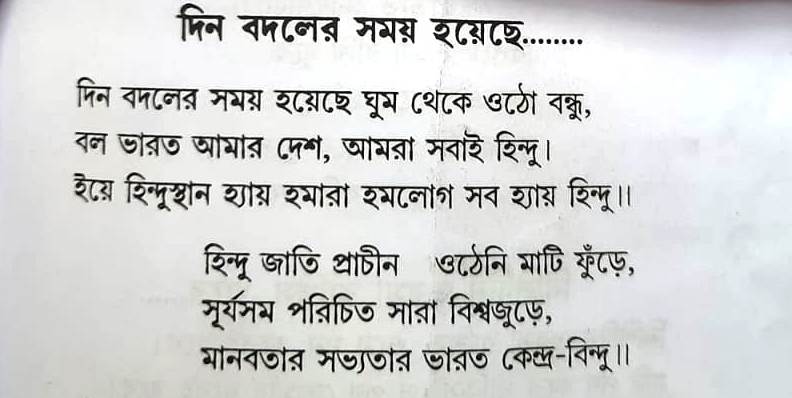
Here is a most relevant verse from a poem that calls upon the Hindu consciousness to wake from a prolonged lethargy and inertia:
The time for change has come—wake up, friend,
Say India is my country; we are all Hindus.
The Hindu nation is ancient, not born from the soil overnight,
Known like the sun across the entire world.
India is the centre of Humanity and civilisation…
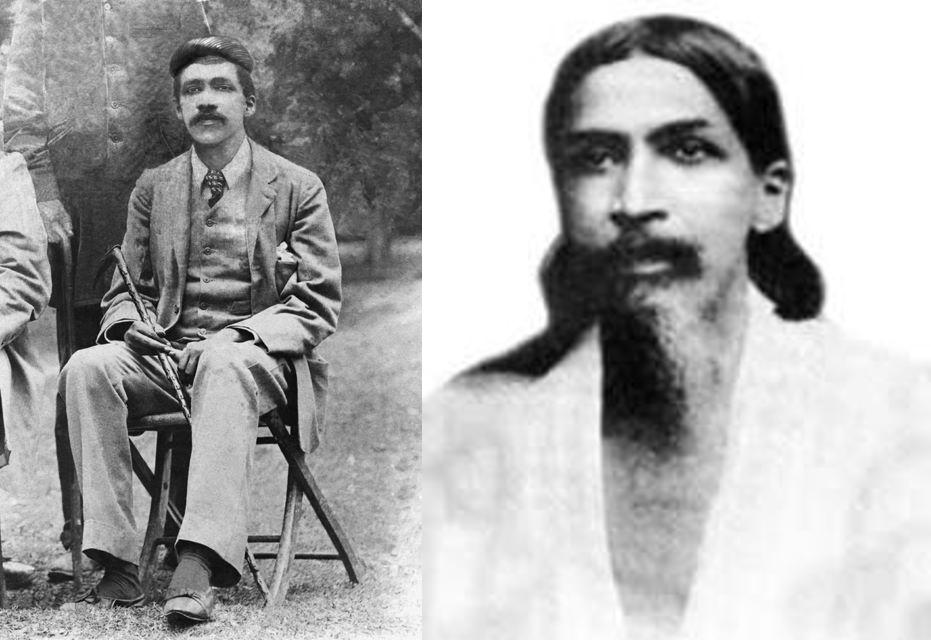
— Poet: Shri Baidyanath Banerjee
Waking up from such induced lethargy or inertia is an essential first step; however, if the reasons for such a centuries-long slumber remain unexamined, the act of shaking off sleep is merely a reprieve before falling back into the same state.
Here comes the importance of identifying the source of this condition. Was the sleep induced by literal substances like opium, cannabis, or bhang? Or was it the result of a more insidious “sense-destroying intoxicant” that rendered the mind numb?
What kind of intoxication was this? Was the slumber amnesia driven? Here is an example from Bengal.
Hindu’s Intellectual Amnesia:
If we replace Anger with Pride, Bhagwat Gita Ch-2/63 suits well to the Bengal Hindu intellectual post the East India Co.
क्रोधाद्भवतिसम्मोह: सम्मोहात्स्मृतिविभ्रम: |
स्मृतिभ्रंशाद्बुद्धिनाशो बुद्धिनाशात्प्रणश्यति I 2I || 63||
BG 2.63: Anger leads to clouding of judgment, which results in bewilderment of memory. When memory is bewildered, the intellect gets destroyed; and when the intellect is destroyed, one is ruined.
Background:
In 2000 BC, Moses claimed the Land of Honey and Milk for his followers (Jews) and called it ‘Israel’ in Arabia. It is well known how they lost their demography in the hands of the Romans, Christian and Muslims before returning home (Israel) in 1948.
Whereas some 35% (2011-Apx) Hindus of Bengal (both sides) think their linguistic identity is their SHIELD from being extinct, knowing very well that Bengali is the second-largest Islamic Language after Arabic.
Yazidis, Druze, Kurds, and even those who converted to Christianity lost their “Arab identity” along with Jews.
Hinduism in Bengal:
The Bengali Hindu intelligentsia (BHI) of British India developed severe Amnesia and resorted to diluting their civilisational identity, presumably due to the Unitarian Church’s nurturing and upbringing in English.
Do BHI think roots are useless for a tree because they are not visible? They might think a tree is known by its fruit; therefore, enjoy the fruit and go to sleep.
A couple of world-famous Hindus of Bengal, and the second-highest Muslim language in the world, are going to save the Tree?
It is well known that 113 out of 294 assembly seats in the Hindu Homeland, WB, are unofficially reserved for Muslims.
Is this the time to look at one’s future like a crow that closes its eyes while hiding its food?
Bengali Linguistic Nationalism:
“The tragedy of the Hindu Bengali intellectual is the belief that history is a series of isolated events rather than a repeating cycle. They accepted Jinnah’s 1947 secular overtures as gospel, only to be surprised by the 1950 riots. They accepted Mujib’s 1972 invitation to ‘remain Bengali,’ only to witness the slow erosion of the Hindu footprint in the very villages now labelled ‘Hindu’ as a mark of otherness against the Bengali(Muslim) majority”.
An African country, Egypt, is officially known as the Arab Republic of Egypt, but Hindu Bengali Intellectuals think they will have their Bengali identity even if SECULAR Hindu politicians can make West Bengal a Muslim majority. Their amnesia prevents them from looking at Yazidis and their generic identity.
Here are Mujib Ur Rahman, along with Jogendranath Mandal and Jyoti Basu’s political comrade, M. A. Jinnah, of the Hindu-Muslim love lock.
1. Mujib’s address to his Bengali Nation (26 March 1972):
“In Bangladesh, there will be no difference between Hindus and Muslims. Everyone will be known as a Bengali. Let no one try to leave their motherland out of fear.”
Reference: Speeches of Sheikh Mujibur Rahman, Government of Bangladesh Press.
Mujibur Rahman’s Speeches on the Exodus of Hindus during the late 1940s.
“I told them [Hindus of Gopalganj], ‘Why are you leaving? This is your country. We will live together.’ I felt that if the Hindus left, the country would become poorer in every way.”
Reference: The Unfinished Memoirs (Sheikh Mujibur Rahman), Oxford University Press. Page – pages 88–95 and 150-160 (1950 riots).
2. Muhammad Ali Jinnah’s address to the first Constituent Assembly of Pakistan on 11 August 1947:
“You are free; you are free to go to your temples, you are free to go to your mosques or to any other place or worship in this State of Pakistan. You may belong to any religion or caste or creed — that has nothing to do with the business of the State.”…………………………………………………… You will find that in the course of time Hindus would cease to be Hindus and Muslims would cease to be Muslims, not in the religious sense, because that is the personal faith of each individual, but in the political sense as citizens of the State.”
Sources:
Official Archive: Debates of the Constituent Assembly of Pakistan, Vol. I, No. 2, pp. 18–20 (11 August 1947).
Stanley Wolpert’s Jinnah of Pakistan (Oxford University Press), specifically in the chapter covering the transfer of power (around page 339 in most editions).
Religion and ethnic identity that Hindu Bengalis do not believe in:
Jews are original Arab as per Genesis, but the world knows and FOZA YUSIF, the Kurdish- Syrian politician of the Democratic Union Party writes:
“Kurds, Arabs, Druze, Armenians, Syriacs, Turmen, Alwawites, Christian and Jews of Syria continue to strive for a better future for their country, one that does justice to its social diversity. “
Ref: The Times of India, Kolkata, 11 February 2026.
3. This author visited his birthplace in Bangladesh in 2012 and witnessed how Muslim localities are called Bengali villages and Hindu areas are called Hindu villages.
The Prognosis of an Imminent Identity Crisis:
It is well known that, before the Islamic invasion, this land had thousands of languages and hundreds of scripts; however, Brahmi and Devanagari unified the length and breadth of the nation without restricting the development of these languages and scripts.
• Sindh: lost its Brahmi, Devanagari, or Khudabadi script forever between the 12th and 16th centuries
• Punjab: Script got attacked on Brahmi, Sanskrit and Kharosthi by the 11th- 12th century and developed Shahmukhi and Gurmukhi, but by the 16th century, severe attacks emerged and lost all script under the sword to the PERSIAN-Arabic ones except one.
• Afghanistan and Baluchistan lost in the 7th-8th centuries.
• Kashmir: used the Sanskrit and early Kashmiri- Sharada script until the 1330s. By the end of the 14th century, their script had disappeared, and today only 2% of Persian-script-using Hindus remain in the bifurcated Indian portion.
Bangla Language journey in literature and history: ****
1. Sri Krishna Kirtan — Baru Chandidas (1350–1400 CE )
2. Yusuf-Zulekha – Shah Muhammad Sagir (c. 1400–1450) (story from the Old Testament)
3. Manasamangal — Bipradas Pipilai (c. 1495 CE )
4. Nabibangsha , Syed Sultan ( c. 1580–1600) – Prophet’s dynasty.
5. Padmavati , Alaol , ( c. 1651) – An adaptation of Malik Muhammad Jayasi’s “Padmavat”.
First Printed Book:
Print typographer: Sir Charles Wilkins (1749 – 1836) and Engraved by Panchanan Karmakar in 1778.
1. A Grammar of the Bengal Language: by Nathaniel Brassey Halhed, (1778 CE)
2. “Mangal Samachar” adaptation of the New Testament by Missionary: run by William Carry
3. Rājā Pratāpāditya Charitra, by Munshi Ramram Basu, 1801 CE, Same missionary press.
4. Ramayana & Mahabharata (Manuscript translation began in the 16th century) in 1801-1803: First attack on Hinduism by the same mission press.
*** 1. Ref: Sukumar Sen — History of Bengali Literature
2. Banglapedia: Syed Sultan, Encyclopedia Britannica and Wikipedia.
3. Eaton, Richard M. — The Rise of Islam and the Bengal Frontier
What a wonder, if Hindus are proud of the Christian Missionary’s Printed Bangla Bible (ruled 285 years), why avoid talking about Muslims ruler (540 years) books?
What is wrong with accepting that Turkic rulers promoted the Bengali language, as their language was not acceptable to non-Turkic Muslim rulers, and Urdu was not in existence?
Church adopted TAMIL the way UMMAH adopted Bengali. Both drove Hindus away from Sanskrit, and their purpose might have been identical.
In 1839, nearly 500 residents of Dhaka submitted a petition to the colonial government arguing that Persian (in Perso-Arabic script) should be preferred over Bengali for official and judicial use.
“Musalmani Bangla”: By James Long (1814–1887), an Anglo-Irish priest: @@@
• 1800–1830s: William Carey, with Pundit Mrityunjoy Vidyalankar at Fort William College, designs Sanskritized Bengali.
• 1801–1834, another Padre, Rev. James Long, documented and catalogued “Musalmani Bengali” literature.
.1850s–1860sBattala Press Primary source of literature for the Muslim masses in their own dialect.
@@@ Ref:
1. Early Modern Persian, Urdu, and English Historiography by Blain Auer.
2. Vidyasagar’s Bangalar Itihas by Saumya Maitra.
1906: Dhaka formed the Muslim League for political separation from parental culture and ethnicity.
If Turk had decided to change the script, would one have expected Muslim converts to object? Hindus were already a minority.
Ref: https://cgs-bd.com/article/5773/How-Religion-Ignites-India
Did our BHI take any preventive measures, or are they unaware of the facts about other major languages of civilisational importance faced under Islam?
The state of the Hindu mind raises a critical question: how can the leaves of a tree be nurtured when its roots are damaged and urgently require attention to survive? To recover from such damage, it is necessary to understand how Hinduism survived for so long against adverse conditions and sustained attacks.
If language represents the leaves of a tree, then cultural heritage constitutes the civilisational roots.
Hindu suppression in Bengal:
(in their own recording: (online search result):
The era of Hindu suppression (1204 – 14th century) commenced with the conquests of Muhammad Bakhtiyar Khalji and Ghiyasuddin Iwaz Khalji at Lakhnauti (Gaur). As recorded by Minhaj-i-Siraj in the Tabaqat-i-Nasiri, this period was marked by the systematic destruction of temples and the establishment of mosques over sacred sites—a process intended to “consecrate” the land for the Sultanate.
Minhaj-i-Siraj Juzjani migrated to India because of the ‘Mongol invasions’of Afghanistan. Arrived in Delhi in 1228 AD and became a Qazi (Judge) and historian. He is the author of The Tabaqat-i Nasiri (1260), which recorded the “Glorious Journey” of Islam in the subcontinent. He died in Delhi shortly after 1266.
Tabakat-i-Nasiri: A General History of the Muhammadan Dynasties of Asia, Including Hindustan, translated by Major H.G. Raverty (1881).
Here are a few quotes available online:
1. The Conquest of Bihar and Nalanda
Minhaj describes Muhammad bin Bakhtiyar Khalji’s campaign, where the destruction of a fortified “Vihara” (monastery/temple complex) is framed as a victory for Islam.
Original Persian:
“…و آن حصار را بگرفت و غنیمت بسیار یافت و اکثر آن مردمان که در آن حصار بودند سر تراشیده بودند و همه را بکشت و آن جایگاه را مدرسه می گفتند…”
English Translation:
“…He [Bakhtiyar Khalji] captured that fortress and acquired great booty. The majority of the inhabitants of that place were Brahmins with shaven heads, and he slew them all. They called that place a Madrasa [the university of Nalanda / Vikramshila]…”
Medieval Chroniclers on the Islamisation of Bengal:
1. Shams-i Siraj Afif (Tarikh-i-Firuz Shahi) :
2. Ziauddin Barani (Tarikh-i-Firuz Shahi & Fatwa-i-Jahandari)
3. Ghulam Husain Salim (Riyaz-us-Salatin) :
4. Yahya bin Ahmad Sirhindi (Tarikh-i-Mubarak Shahi):
Details of the survival of Hinduism in Bengal are discussed on page no…….
Here is what the Humanity (Manushyatva) of one of the Hindu schools of thought did for Hinduism, compared to what the Unitarian Church’s Humanity did for the Unitarian Church. Details explained under Hindu Renaissance (Page …..).
Baptist Rev. William Adam, after failing to convert Rājā Ram Mohan Roy***, converted to Unitarianism. He represented a “Humanity” rooted in Rationalist Christianity and the Abolitionist movement ( slavery, etc.).
In contrast, Hindu “Humanity”, rooted in the divinity of Atman, underwent a vital transformation during Bengal’s Islamic period, becoming a Dhanvantari Amrit—a vital elixir that ensured civilisational survival and spiritual continuity against all odds.
While the Unitarian Humanity sought to reform the “leaves” of the Tree through external logic, the indigenous Humanity, the “Amrit”, preserved the “roots” from within.
*** 1. The Life and Letters of Rammohun Roy by Sophia Dobson Collet. This remains the primary source for Adam’s intellectual surrender to Roy’s Vedantic arguments.
2. The Politics of Christian Conversion in Colonial India (Harvard University Press) by Gauri Viswanathan.
Kurma Avatar: कूर्म अवतार that saved Hinduism in Bengal:
Baru Chandidas / Chandidas (1339–1399 AD) :
and
Chaitanya Mahaprabhu ( 1486 to 1534):
Raghunandana Bhattacharya (1520–1575) :
Also known as Baru Chandidas, Deen Chandidas, and Dwij Chandidas.
His real name was Ananta. “Baru” comes from Batu or Barujye ( modern Bandopadhaya). Janmabhumi is in the present-day Magura district (Bangladesh), and Karmabhumi is the Basuli Devi temple in Nanur, Birbhum.
Scholars argue that, much like “Vyasa” in Sanskrit literature, “Chandidas” became a prestigious pseudonym in Bangla, particularly within Sahajiya (esoteric) Vaishnavism. Badu Chandidas’s Manushyatva ( Manabota or Humanism):
“Shunore manush bhai, sabar upore manush satya, tahar upore nai”
“ শুনহে হে মানুষ ভাই, সবার উপরে মানুষ সত্য তাহার উপরে নাই ”
Translation: ঃ(Listen, O human brother, Humanity is the supreme truth; there is nothing above it), serves as the spiritual anchor for the entire “school” of Chandidas’s poetry.
An interregnum शासनांतराल/রাজশূন্যকাল during Islamic Bengal:
Under the interregnum, Sir Jadunath Sarkar, in his The History of Bengal (Vol. II), described the “Hindu Interregnum” as a unique period of political transition.
“Just as historians and literati have characterised the transitional periods between the Palas and Senas, or the post-Mughal era, as মাৎস্যন্যায় (Matsyanyaya ( pre-Pala era) or the ‘law of the fishes, the interregnum between the early Ilyas Shahi dynasty and the rise of Rājā Ganesha and his son, Jalaluddin Muhammad Shah, warrants a similar description.
This author interprets this era as one in which the ruling class lacked administrative, strategic, and political strength, creating a vacuum that enabled a burgeoning Islamic theocracy to exert systemic pressure and impose its will on the state. The precarious position of Rājā Ganesha’s son, forced to oscillate between the identities of Yadu Narayan and Jalaluddin, epitomises this political duress.
In response, Hinduism’s inherently non-authoritarian approach and the democratic flexibility of the Dharma Shastras were profoundly challenged. To prevent the erasure of Sanatana Dharma under the dual pressures of the sword and the proselytising book (or Sharia), the social system underwent a self-preservationist shift. It abandoned its historic fluidity in favour of a protective rigidity, codifying regional and local customs into a defensive ‘social fortress’.
The Architecture of Hindu Resistance: 14th–15th century:
Raghunandana Bhattacharya (1520–1575) of Nabadwip was a student/disciple of Srinatha Acharya Chudamani and an authority on Hindu jurisprudence. When Hinduism came under an ecliptical state in Bengal, he formulated the Astavimsati-tattva***, a series of 28 concise digests synthesising diverse scriptural sources on rituals, purification, worship, and lifecycle sacraments (samskaras), with Tantric influences. Notable among these is the Durgāpūjātattva, a manual detailing the autumnal (‘অকাল বোধন‘ )worship of the goddess Durgā, integrating mantras, visualisations, offerings, and purity protocols as royal marshal rites.
It is this “Tatva” or “essence” that should rightly be interpreted as Kurma Avatar: कूर्म अवतार (Tortoise) that not only saved Hinduism during Islamic aggression but also resurfaced as Tattvabodhini Sabha (1839) and as HINDUTVA in the literary expression of Chandranath Basu ( 1892) during Evangelical attack in British India.
*** was translated in Sanskrit as “The Nirṇayāmṛta by Allāḍanātha on determining auspicious times for Hindu religious ceremonies. It comprises four chapters (prakaraṇas): vrata-nirṇaya, tithi-nirṇaya, śrāddha-nirṇaya, and āśauca-nirnaya as appears in the Collected Works of Sir R.G. Bhandarkar. Vol. II. Bhandarkar Oriental Research Institute. pp. 143–144.
To understand the sudden shift toward social rigidity, one must look beyond the surface of politics and into the Smarta-Panchayana, a tradition of the Adi Shankaracharya school, where five deities are worshipped together under the principle of equality. Since idol worship was prohibited, they were represented as :
Shiva = Bana-linga stone
Vishnu = Shaligrama
Devi = special stone or image
Surya = crystal or ruby-like stone
Ganesha = reddish stone
While modern critics often label scholars like Raghunandana as mere architects of orthodoxy, they were, in reality, the social engineers of a community when the King was no longer a protector of Dharma.
This defensive posture is most vividly captured in Yadu Narayan’s eventual “oscillation” back to Jalaluddin Shah. It proved that against a rigid, book-bound Theocracy, the old democratic flexibility was no longer enough.
The Hiranyagarbha (Golden Cow) ritual serves as a definitive mechanism for returning the convert to Sanatan Dharma.
This ritual was not merely a ceremony; it was a desperate strategic attempt by the Hindu elite to use the “fluidity” of the Shastras to reclaim political agency. Consequently, this era gave rise to a “quarantine” psychology. The tightening of Kulin regulations as a survivalist tactic of defensive customisation, by making social laws more rigid, created a “social fortress,” ensuring that even if the state were lost to the sword, the core of Sanatana Dharma would remain insulated and unerasable.
It is these so-called orthodoxy or social rigidities that survive in the Bengali psyche till the Hindu Renaissance by European Evangelists.”The Church had every reason to break it, and many Hindu Bengalis supported it to prove themselves as Modern, scientific Hindus.
However, the Hindu Renaissance would have sought to remove excess and superstitious elements from this RIGIDITY, rather than to Christianize Hindu society along Unitarian lines.
Note :
The first idol-worshipping ban ended with Durgā Puja by Kongsho Narayan Roy Bahadur of Rajshahi (now in Bangladesh) in 1850, which the post-Renaissance modern Hindus later adopted as an art exhibition, festival, and carnival.
The background:
Shamsuddin Ilyas Shah (1342–1358) —originally a Persian-speaking Central Asian—was the first independent Muslim ruler of undivided Bengal.
Later, Maharaja Ganesha Narayan Ray (1413), a Hindu ruler, overthrew the Ilyas Shahi dynasty and established a Hindu empire in Bengal (1415–1435).
His son Yadu Narayan had only one way to save his throne—by converting.
Thus, he became Jalaluddin Muhammad Shah.
After defeating the Ilyas Shahis, Ganesha Dev asked Krittibas Ojha to translate the Ramayana into Bengali. After Ganesha Dev’s death, his son—now Muslim—wanted to fulfil his father’s wish and keep Islamic scholars happy.
Some experts believe that Krittibas’ adoption included the following in his Ramayana:
• Valmiki as a bandit
• Sita’s fire ordeal
• Akal Bodhan (out-of-season Durgā Puja)
Chandidas’s 1250 composition and rendering as Kirtan, with his concept or brand of MANYSHATVA (Humanity), helped Hindus remain Hindu without traditional rituals, including Murthi Puja.
“According to the oral traditions preserved by scholars like Basanta Ranjan Ray Vidvadvallabh, the poet Chandidas met a tragic end at the court of Sultan Mahmud Shah of Gaur. It is said that the Sultan’s Begum was so captivated by the ‘essence’ of his music that the Sultan, in a fit of jealousy and rage, sentenced the poet to a brutal death. This legend serves as a grim reminder of the tension between the ‘fluidity’ of the Vaishnava spirit and the ‘rigidity’ of the medieval sovereign power.”
Some say his song was:
“Those who explain religion without knowing the heart—
There is no need, friend, to listen to them; keep them outside.
My outer door is closed; the inner door is open.”
“Says Chandidas: love of Krishna rejects caste, lineage, and status.”
Honouring Sahajiya philosophy, he wrote:
“Listen, brothers—above all stands Man; nothing is above him.”
Sources of this idea:
The concept of Humanity and its universality derives from Sahajiya Philosophy, in which the individual body is more significant than an externalised deity.
Core Philosophy:
“Sahajiya” (from Sahaja) denotes that which is “innate” or “natural.” In this view, enlightenment is not an external acquisition but a realisation of one’s natural state. The human body is viewed as a microcosm of the universe (Deha-tattva). The path seeks to transform human passion (Kama) into divine love (Prema).
Historical Synthesis:
This tradition extends through Buddhist Tantra (with a focus on Shunyata and Karuna to attain Maha-sukha) and Vaishnava schools. It finds its metaphysical roots in the Mahavakyas of the Upanishads:
• Aham Brahmasmi (I am the Absolute)
• Tat Tvam Asi (That thou art)
As echoed in the Bhagavad Gita (7.6): “I am the source of all creation; into Me it dissolves.” In Sahajiya thought, that “source” is found not in the clouds, but within the breath and blood of the human person.
“Badu Chandidas emerged as a central figure in preserving core Hindu spirituality through folk culture by promoting his unique form of ‘Humanity.’ He successfully navigated the toughest challenges to Hinduism posed by both rigid Sharia law and internal Hindu orthodoxy. Crucially, he bridged Hindu, Muslim, and Buddhist social barriers without resorting to religious infringement, creating a proto-secular space for a unified Bengali identity.”
EIC /Unitarian Church’s Humanityand Hindu Renaissance:
Did Bengali nationalism dilute Hindu identity?
Refugee trains from Pakistan carried corpses of massacred Hindus labelled “Reward for Freedom” arrived, but they could not move most of the refugee, English-educated Hindus of West Bengal. Could it be due to the gift of English?
Humanity through Christian rationality:
During 1560-68, Francis Dávid obtained the ‘Edict of Torda’ from King John Sigismund Zápolya of Transylvania (modern Romania), thereby breaking away from the Papacy by rejecting the Trinity and asserting that Jesus was a human teacher and moral guide rather than God incarnate.
The Unitarian Church strongly emphasised the Humanity and universal dignity of all human beings. It taught that God is one and belongs to all people, encouraging religious tolerance and freedom of conscience.
In the Calcutta chapter:
“Calcutta Unitarian Committee “or society was formed by Rājā Rammohun Roy and Rev. William Adam in 1821. They speak of religious “tolerance”, not unison or equality that Hindu philosophy accommodates.
The Humanity and universality of “tolerance” are subjected to tolerating the intolerable or accepting the unacceptable, and this is the father of European secularism.
The Kali-Jesus Synthesis:
The Breach of the Social Fortress and the beginning of Jesu Puja?
In 1875, the meeting between Keshab Chandra Sen and Sri Ramakrishna at Belgharia sparked a shift that led to the Naba Bidhan (New Dispensation) in 1881. This “Universal Religion” claimed all faiths—Christianity, Hinduism, Islam, and Buddhism—were equal paths to the same God.
The Ritualistic Hybrid:
Keshab began worshipping God as “Mother” through a psychological synthesis. While avoiding a physical image of Kali, he adopted Tantric rituals that included incense, candles, and flowers. This was not mere tolerance; it was an attempt to merge the identities of Jesus, Kali, and Allah within the devotee.
The Political Consequence: The “Dharamshala” State
This synthesis, fueled by European secularism, pressured English-educated Hindus to break their protective social rigidity. However, while Hindus dismantled their “Social Fortress,” the Abrahamic Theocracies remained rigid.
This imbalance led to the abandonment of sacred taboos (such as beef-eating) and the encouragement of inter-religious marriage as a sign of “progress.”
By dissolving traditional boundaries, the community was pushed toward making India a Dharamshala (a free inn) rather than a sovereign nation. This mindset manifests today in opposition to the National Register of Citizens (NRC), which serves a long-term agenda to erase the core identity of Sanatana Dharma.
A real big question remained to be analyzed:
How truth falters under the pressure of narratives in both positive and negative effects:
Martial Vanga to Cowardice Bengal:
The Gangaridai: The Martial Foundations of Vanga**
Long before colonial tropes of “effeminacy” took root, classical Greek and Roman historians recorded the people of the Ganges delta—the Gangaridai—as a formidable military powerhouse. During the Nanda and Mauryan eras, they were known for unparalleled bravery and were called “invincible” warriors of Bengal.
** Diodorus Siculus, Bibliotheca Historica (1st Century BCE)
Historical Observations on the Bengali Character:
The warrior people of Vanga or Bengal, after centuries of Buddhist and Muslim rule, became “cowardly,” or were such narratives by Christian missionaries in the 16th to 19th centuries intended to invite European invasion of Bengal as a gateway to the mainland?
1. Father Pierre du Jarric (c. 1599)
“The inhabitants [of Bengal] are a people more used to merchandise than to war, and are so fearful and cowardly that the sight of a few armed Portuguese or Mughals is enough to put thousands to flight.”
Reference: Du Jarric, P. (1608). Histoire des choses plus mémorables advenues tant ez Indes orientales. (Translated in Akbar and the Jesuits, C.H. Payne, 1926).
2. François Bernier (c. 1666)
“The inhabitants of Bengal are a most unwarlike and effeminate race. It is a common saying that a single European company would find no difficulty in overcoming the whole army of the King of Bengal.”
Reference: Bernier, F. (1670). Travels in the Mogul Empire, AD 1656-1668. (Revised edition by Archibald Constable, 1891).
3. Charles Grant (1792)
“The Bengalese are a race of extraordinary pusillanimity… they are void of public spirit, dishonest, and their character is a compound of servility and fraud.”
Reference: Grant, C. (1792). Observations on the State of Society among the Asiatic Subjects of Great Britain. (Report presented to the East India Company).
4. Robert Orme (1803)
“The natives of Bengal are still more effeminate than those of the southern provinces… Courage is a quality with which the inhabitant of Bengal is entirely unacquainted.”
Reference: Orme, R. (1803). A History of the Military Transactions of the British Nation in Indostan. Vol. II.
5. Thomas Babington Macaulay (1840)
“The physical organisation of the Bengalee is feeble even to effeminacy… his pursuits are sedentary, his limbs delicate, his movements languid… his mind bears a singular analogy to his body; it is weak even to helplessness for purposes of resistance.”
Reference: Macaulay, T. B. (1840). Critical and Historical Essays: Lord Clive.
Its Positive effects :
Hindu Assertions and Responses (16th–19th century)
1. Maharaja Pratapaditya of Jessore (c. 1584–1611)
Known as one of the Baro-Bhuyans, he established an independent Hindu kingdom in Bengal, resisting Mughal hegemony with a powerful naval force and a specialised infantry of Paiks and Dhalis.
Martial Traditions of Bengal:
The martial heritage of Bengal emerged:
a. Paiks
The Paiks were a hereditary class of landed militia in Bengal who served as the backbone of local defence, holding rent-free land in exchange for military service during both the Baro-Bhuyan and early colonial eras.
b. Dhalis
The Dhalis (literally “shield-bearers”) were specialised frontline infantrymen renowned for their exceptional skill with the sword and the dhal (large wicker or leather shield).
Reference: Roy, A. C. (1968). History of Bengal: Mughal Period. / Ray, N. (1906). Pratapaditya.
2. The Resistance of Maharaja Nandakumar (1775)
His execution by the British for challenging Warren Hastings became a symbol of Hindu moral resistance; locals noted his calm composure at the gallows as a silent defiance against colonial judicial tyranny.
Reference: Beveridge, H. (1886). The Trial of Maharaja Nanda Kumar: A Narrative of a Judicial Murder.
3. The Sannyasi and Fakir Rebellion (c. 1763–1800)
Armed Hindu ascetics (Nagas/Sannyasis) led a decades-long violent insurgency against the East India Company’s tax collections, proving that the “monastic” class possessed significant martial prowess and local support.
Reference: Chandra, A. N. (1977). The Sannyasi Rebellion. / Lorenzen, D. N. (1978).
Warrior Ascetics in Indian History.
These lead to the emergence of Resistance and Survival of Martial Arts
a. Lathi-khela
Alternatively, stick-fighting became the primary form of self-defence for Bengali Hindus after the British Disarmament Act restricted swords and firearms. It was famously revived by nationalists such as Sarabala Devi Chaudhurani and Pulin Behari Das to instil physical “manliness” and discipline in revolutionary youth.
Reference: Das, P. B. (1920). Lathi-khela o Asidhan. / Rosselli, J. (1980). The Self-Image of Effeminacy and British Rule.
b. Sari-Paik System
A structured system of village-level defence in which every household contributed a “Sari” (row/turn) of non-disabled men to serve as Paiks. This decentralised military organisation ensured that the local population remained “battle-ready” and was a key reason why early European travellers found the countryside difficult to penetrate.
Reference: Ray, R. K. (1984). Social Conflict and Political Unrest in Bengal.
How the British handled it:
The Great Disarmament: From Sword to Lathi
The Indian Arms Act (1878)
Enacted by Lord Lytton, this act made it a criminal offence for Indians to keep, sell, or manufacture arms (including swords and spears) without a government license, effectively “civilising” the Bengali peasantry by force.
Reference: Indian Arms Act (Act XI of 1878). / Lytton, E. R. (1878). Minutes on the Arms Act.
The Rise of Lathi-khela (Stick Fighting)
Following the 1878 Act, the Lathi (bamboo staff) became the “weapon of the disarmed.” It was legally categorised as an agricultural tool rather than a weapon, allowing Hindu youth to maintain martial agility under the guise of sport or village tradition.
Reference: Rosselli, J. (1980). The Self-Image of Effeminacy and British Rule.
4. Bankim Chandra Chattopadhyay (1882)
Through his novel Anandamath and the hymn Vande Mataram, he resurrected the image of the “Motherland” as a martial deity, explicitly challenging the British “effeminacy” trope by creating the archetype of the warrior-monk.
Reference: Chattopadhyay, B. C. (1882). Anandamath. (English Translation by Julius Lipner, 2005).
5. Swami Vivekananda (1893–1902)
He famously demanded a “Man-making religion” and exhorted Hindus to cultivate “muscles of iron and nerves of steel,” directly refuting missionary claims by stating that “religion is not for cowards.”
Reference: Vivekananda, S. (1907). The Complete Works of Swami Vivekananda (Vol. III: Lectures from Colombo to Almora).
Internal Critiques and “Negative” Reactions
While many responded with defiance, some thinkers agreed with the foreign critics, arguing that Hindu society had indeed become weak due to internal rot.
1. Rājā Ram Mohan Roy (1828)
He critiqued the Hindu society of his time as “degenerate” and argued that the preoccupation with “insignificant” rituals and caste divisions had rendered the people “incapable of any great enterprise” or political unity.
Reference: Roy, R. M. (1828). The Precepts of Jesus: The Guide to Peace and Happiness.
2. The “Young Bengal” Movement (1830s)
Influenced by Henry Derozio, many radical Hindu students at Hindu College initially reacted by mocking their own traditions as “superstitious” and “weak,” often viewing British rule as a necessary “civilising” force to cure Hindu stagnation.
Reference: Sarkar, S. (1985). On the Bengal Renaissance.
3. Internalised Inferiority (19th Century Social Commentary)
Certain sections of the Bhadralok (elite) adopted the “clerk mentality,” accepting the British view of themselves as “unfit for the sword” and focusing exclusively on administrative servility to the EIC.
Reference: Sinha, M. (1995). Colonial Masculinity: The ‘Manly Englishman’ and the ‘Effeminate Bengali’.
Thus, the Humanity of Badu Chandidas was the Kurma (Turtle) Avatar, while the EIC Hindu Renaissance is a Maricha, the Golden Deer of the Ramayana.
 subhasmitra.co.in
You must be logged in to post a comment.