
Subhas Mitra: 15 Feb 2026
Yesterday I spent about 6 hours together at the home of an MPhil Sanskrit teacher at a Vedanta College. He is a lion to a Fauji mouse like me.
Our discussion began with my book’s forward note on Useful Idiots. Vladimir Lenin coined the word to describe naive Western sympathisers of the Soviet Union. In India, Sita Ram Goyal and Arun Shourie used the word to describe Indian communists’ senseless hypocrisy, but I have used it to mean Hindus who interpret Hindu wisdom through British propaganda.
It seems that even many current Sanskrit Pundits are confused. They fail to distinguish between the fluid social order of ancient India—based on the adaptable and debatable principles of Dharma Shastra—and the authoritative, centralised, top-down structures of faith-based, theocratic religions.
By treating our organic jurisprudence as an unquestionable “theocratic order,” they have fallen into the trap of viewing Hindu civilisation through a lens that was never its own.
We spoke on Propaganda:
1. Ishwar Chandra Vidyasagar championed, and Lord Dalhousie passed, the Hindu Widows’ Remarriage law (Act XV, 1856). He argued based on “Parashara Samhita”.
First Marriage: Vidyasagar facilitated the first legal remarriage of a Hindu widow in Calcutta on 7 December 1856.
2. Sati was “abolished”, but in which scripture was it recommended?
The Source: Rig Veda 10.18.7
This verse originally invited widowed women to lead the funeral procession, not to join the pyre.
आ रोहन्तु जनयो योनिमग्रे ॥
(ā rohantu janayo yonim agre). Translation: “Let the mothers (widows) advance first to the altar/house.”Agre: Means “first,” “in front,” or “to go forth.”
The Altered Version (Used to justify Sati):
आ रोहन्तु जनयो योनिमग्नेः ॥
(ā rohantu janayo yonim agneḥ) Agneḥ: The genitive form of Agni, meaning “of fire” or “into the fire.”
Who invented this, Max Müller or Willum Jones? Was it to Itching-711? Because Persian women too were conscious about the purity of lineage (Fetus), thus valued chastity, and they used to die in fire like our warrior ladies’ “Johar” under Muslim rule?
Questions arise:
When was widow remarriage introduced in the Dharma Shastra, and how, when, and why was it discontinued?
The answer is:
Itching- 711, which means “Blow from the Green”, i.e. Islamic thundering on Hindu civilisation.
A Call for Intellectual Sovereignty
It is time for Hindu researchers, social scientists, and historians to move beyond the linguistic constraints of English and reclaim the scholarship of their own heritage through Sanskrit and Persian.
We must re-evaluate the European Renaissance, a period traditionally defined by the West’s “discovery” of its own classical past. However, evidence suggests that the emergence of Ancient Indian Knowledge during this era was far more than a mere byproduct. It is essential to research whether the influx of Sanskrit texts—and the sophisticated scientific and linguistic frameworks they contained—acted as a primary catalyst for European scientific inventions.
To safeguard this secret and keep the Hindu “think tank” in a state of subordination, colonial powers may have systematically resorted to distorting Hindu scriptures and demeaning the Hindu way of life. We have already witnessed how the machinery of Abrahamic superiority and expansionism operates through its two historical pillars: the Cross and the Crescent.
My Observation for Advanced Researchers:
All the damage Arab has done in Hindu society might have been hidden by the British rulers. All the “bad or ill” things the British did to Hindus had been passed on to Muslim Extremism. ‘Two-Nation Theory’ is one such invention of the British Parliament, applied in India.
Our education was designed to ensure we always support those hide-and-seek British Theoreticians.
Here is the explanation:
Nobel Laureate Author V. S. Naipaul of Trinidad said: “India is the only country where people do not believe their own historians but love their colonel master’s version.”
Here are foreign historians on IKS.
German philosopher Friedrich Wilhelm Nietzsche (1844 –1900) argued that the “Manusmriti” was a “life-affirming” law book that recognised the natural order of human hierarchy, contrasting it sharply with the “life-denying” morality of Christianity in his works- The Antichrist (1888) and Twilight of the Idols (1889).
Nicholas Dirks, in his book Castes of Mind: Colonialism and the Making of Modern India (2001), argues that while caste existed in pre-colonial India, it was a fluid, diverse, and politically contingent system of social identity. He contends that the British colonial state “invented” the rigid, hierarchical, and single-category system we recognise today through its “enumerative obsession”—specifically the census.
The 1901 Census is considered a turning point in this transformation because of the work of Sir Herbert Hope Risley, the Census Commissioner.
It seems that students in India, from primary school to university, are brought up or groomed in Abrahamic thought and imagination, irrespective of language. Let us accept there was SATI, Female Infanticide, child marriage, or widow marriage restriction, but how can HINDUS link it to Hinduism or Dharma Shastra (Hindu Jurisprudence?)
Why and how Kefir women undertook self-immolation:
What is Satitva (chastity) in Hinduism, from Sati, is “Cithra” (lineage, Fetus, or chastity) in Zoroastrianism. The root of both words meant to maintain the purity of lineage or Fetus. Due to ‘Itch-711’, the Rajput noble preferred death over honour by JAUHAR (“Honour-Suicide”). The Sassanian Royals (Zoroastrians) called it KHWARR (divine glory). They jumped from the hills (the “Mountain of the Princess” or Pir-e Sabz) to wells.
“The fire of the Jauhar was not a flame of despair, but a flame of sovereignty. Just as the Sassanian princesses preferred the ‘shroud of fire’ over the ‘silks of the bed of Caliphate, as a victory that transcended physical death.”
These are neither part of any Hindu nor Zoroastrian scriptures. In Persia, it appears in Ferdowsi’s (11th century) “Shahnameh” that captures the ethos of the Sassanian elite.
The Persian Couplets:
مرا مرگ خوشتر از آن ننگ و عار
که با دشمنان باشم اندر حصار
Translation:
“To me, death is sweeter than that shame and disgrace,
Than to be held within the walls (or embrace) of the enemy.”
In the Persian ethos of Nang-o-Nam (Shame and Name/Honour), this line is often cited:
به ناموس و ننگ است ما را نبرد
به از زنده گشتن به کردارِ کَرد
Translation:
“Our battle is for the sake of honour and reputation;
It is better to [die] than to live in a state of subjugation.”
In Hinduism, aside from the Rg Veda, there are no scriptures that could be quoted on widow immolation. However, some Puranas show certain (Kamya Karma—Ritual) acts as a way for a woman to “purify” her husband’s sins and guarantee a place in heaven (Swarga).
• The Garuda Purana (10.45-53): This text contains passages stating that a woman who burns herself on her husband’s pyre will reside in heaven for as many years as there are hairs on the human body.
• The Vishnu Purana mentions that the wives of Krishna (like Shaibya and Rukmini) entered the fire upon His passing.
• Bhagavata Purana: Describes Sati (the Goddess) herself immolating herself in the sacrificial fire of Daksha, though notably, this was out of insult to her husband (Shiva), not because Shiva had died.
• Then came the Padma Puran (much before the Church came to India), which, in the Srishti Khanda, explicitly forbids learned (Brahmin) women from entering the fire, categorising the act as a “suicide” that leads to darkness rather than heaven. Caste was unheard of.
• The Shloka:
पञ्चमी च तथा नारी न दहेद्ब्राह्मणी तथा ।
मतं पतिं समुद्दिश्य न दहेत्तु कथञ्चन ॥
या दहेच्च मृते पत्यौ सा तु साऽऽत्मघातिनी ।
न स्वर्गं गच्छति सा नारी न लोकाच्च परायणम् ॥
(Padma Purana, Srishti Khanda)
Translation:
“A Brahmin woman should not burn herself. She should never burn herself upon the death of her husband. She who burns herself upon the death of her husband is a self-murderer (Atmaghatini). That woman neither goes to heaven nor to any higher world.”
Arguing that the Puranic SATI existed during the EIC’s rule in Bengal could be a fabrication from the Puranas.
Hindu societies have been fluid from their inception. Sati reemerged only as JAUHAR.
Child Marriage:
Child Marriage (Pre-Puberty Marriage):
In the Vedic period, women typically married as adults, after the Upanayana (education) phase. During the Sutra and Smriti era, the age of marriage began to decline, but a father was still bound to arrange SWAMBARAM (self-selection of a husband). When Swambaram was being violated :
Parasara Smriti (Chapter 7, Verse 6-7)
The Parasara Smriti is often cited as the primary authority for the Kali Yuga. It uses a “spiritual merit” system to encourage parents to marry off daughters early.
The Shloka:
अष्टवर्षा भवेद्गौरी नववर्षा तु रोहिणी ।
दशवर्षा भवेत्कन्या अत ऊर्ध्वं रजस्वला ॥
Translation:
“An eight-year-old girl is Gauri; a nine-year-old is Rohini; a ten-year-old is a Kanya (maiden); beyond that, she is Rajasvala (impure/menstruating).”
During 500 CE – 900 CE (Itching- 711), when Kefir girls were being kidnapped under the justification of Ganimat ki maal (Gift earned through Jihad/war), Hindu pundits resorted to various social rigid restrictions.
In Bengal, when Raja Ganesh’s son Jai Narayan became Jalalauddin (back and forth twice, see page ……), there was another gift from Itching711 called NANG, meaning illegitimate sex partners (mostly female, Ganimath ki maal). In later years, some obscured Bengali literature used it literally as Paramour (Female: Nang; Male: Nagar).
The Concept of “Nang” (ننگ):
There is a parallel between the Sanskrit Lajja or Maryada and the Persian Nang. For a Sassanian noblewoman, live with Mam (نام- Fame) and Nang to mean simple “shame” or “disgrace,” Nang was not just “feeling embarrassed”; it was an ontological stain on the family’s Cithra (lineage). ( Satitva Hanan of a Hindu Lady).
After contact with itch711, she became a ganimath ki maal, or became SATI or KHWARR.
Female Infanticide: Scriptural Absence vs. Historical Distortion
There is no known Hindu scripture that advocates for the killing of female infants; on the contrary, the Rig Veda and Upanishads explicitly contain prayers for “heroic daughters.”
Critics often point to a shloka in the Taittiriya Samhita (6.5.10):
The Text:
तस्मात् स्त्रियं जातां परास्यन्ति न पुमांसम् ।
“tasmāt striyaṃ jātāṃ parāsyanti na pumāṃsam”
Translation (Misinterpreted): “Therefore, they lay aside a girl when born, but not a boy.”
However, the Taittiriya Samhita (compiled by Rishi Tittiri) is the foundational text of the Krishna Yajur Veda. It is strictly a manual of Ritual, not Nyaya (Jurisprudence). Because it deals with the technicalities of the sacrificial altar rather than social law, it cannot be used to define a general social context.
Sayana, the 14th-century Prime Minister of the Vijayanagara Empire and a master Vedic commentator, clarified that this verse refers to Social Etiquette within a ritual—specifically the placement or handing over of a child—not to murder. There is every likelihood that this verse was weaponised by colonial-era translators to suit a narrative of Hindu denigration.
The actual tragedy of female infanticide was a later social degeneration. It emerged from the nightmare of post Itch -711 CE invasions—a period marked by mass kidnapping, trafficking, and the treatment of women as Ganimat-e-Maal (spoils of war). To protect the Nang (honour) of their lineage, Rajput nobles resorted to early child marriage. The crushing economic weight of the Dowry system in this unstable environment eventually turned a protective measure into the horrific practice of infanticide.
In Bengal, when such atrocities were becoming part of the culture, many Pundits formulated ways and means to impose restrictions and follow rigidity. (Explained in detail in page….)
The Dual Curse of Bengal: Colonial Narratives and Internal Decay
In Bengal, the crisis of child marriage and the plight of widows intensified as Hindu society adopted increasingly rigid social customs. These were originally defensive, ad-hoc measures designed to shield the community from the “bad effects” of Nang (dishonor), the expansion of Khanqahs***, and the trafficking of women as Ganimat-e-Maal (spoils of war) for foreign slave markets.
*** In Bengal, Sufis often established Khanqahs in rural areas. By providing free food and a sense of egalitarian brotherhood, they became the primary “engines” of social conversion, drawing in the marginalised or those displaced by war.
Ref: Richard M. Eaton, particularly in his seminal work, The Rise of Islam and the Bengal Frontier, 1204–1760.
However, the Kulin system added fuel to this social fire. A segment of fraudulent Brahmins exploited these defensive walls for personal perversion, resorting to polygamy and imposing strict Savarana (intra-caste) age restrictions—exclusively on girls—to facilitate their exploitation.
During the East India Company era, a new class of English-educated Hindus emerged. To win favor with white evangelists and colonial officials, they mischaracterized these localized survival tactics as “ancient scriptural mandates.”
The Origin of Rigidity in Dharma Shastra (Hindu Jurisprudence):
The rigidity we see in the Dharma Shastra today is a historical distortion. It occurred when the fluid concept of Dharma was reduced to “Religion,” and the analytical Shastras were mistranslated as “Scriptures.” Under the colonial lens, the Dharma Shastra was forced to become a Hindu equivalent of the Torah, the Biblical Deuteronomy, or Sharia.
This rigidity did not emerge from within the Hindu mind; European translations of our texts infused it. These translators brought with them an Abrahamic worldview where law is a static command that CAME FROM HEAVEN via Moses, Jesus Christ, or Prophet Mohamed. They imposed a “one-size-fits-all” finality on a system that had historically been adaptable and diverse.
This external narrative is as paradoxical as the imagery that sustains Abrahamic myths. It is the same mindset that places Adam and Eve in Africa without them becoming Black, or insists on Christmas trees, sheep, and snowfall in the landscapes of Jerusalem. It is the same logic that imagines Santa Claus distributing gifts on a sleigh in the deserts of the Middle East. By ignoring the “climate” and “soil” of the Hindu civilisation, they froze our organic laws into a rigid, alien mould to better insubordinate the Hindu think tank.
This is “The Frozen Shastra Syndrome.” By treating a 1,000-year-old social commentary as a “Divine Commandment,” the British essentially stopped the natural “software updates” of the Hindu Mind, making us look “Regressive” when we were actually just “Interrupted.”
The Image:
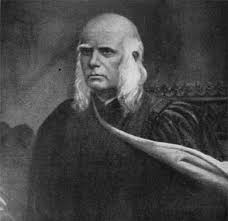
Rev. Krishna Mohan Banerjee, a star pupil of the “Young Bengal” movement at Hindu College under Henry Louis Vivian Derozio, the so-called escapist and rationalist. Following a period of radical rebellion against “orthodox” Hindu customs (which often involved more beef-eating than actual philosophising), he converted to Christianity in 1832. A Cross replaced his Sikha (traditional pigtail).A fruit of the Hindu Renaissance.
 subhasmitra.co.in
You must be logged in to post a comment.