
Subhas Mitra: 01 March 2026
It took nearly 400 (1498 to 1858) for traders of the faith to set foot firmly in Bharat, and then it took 300 years to make the SONE KI CHIDIA (golden Birl) to land of Beggars, Snake charmer and Rope trick.
Who made Bharat Sone Ki Chidya?
Between 95 AD and 150 AD, Kushan kings made Bharat a ‘Golden Bird’ by globalising trade using gold coins and the Silk Route. Kanshka and Vasudeva-I brought uniformity in the fashion (CHOGA and PAJAMA, which later became Pant-Shirt and Salwar-Kameez) during ( c. 191–225 CE)
Ref: 1. “The Golden Age of the Kushanas” by Barkat Ullah
2.”History and Culture of the Indian People, Vol. II: The Age of Imperial Unity” (Bharatiya Vidya Bhavan):
European Christians came to civilise and reform Hinduism in Calcutta, which was a gospel truth to certain Hindus who were CIVILISED by James Mill and Karl Marx to believe that the Ramayana-Mahabharata were fictional stories of feudal lords oppressing the Have Nots, leading Hindus to be superstitious Barbarians with no history worth mentioning.
Here is the other side of the same coin:
Means of Business and Evangelism:
• Vasco da Gama was the first to land in India at Calicut in 1498 and had to return as the Zamorin of Calicut (Samuthiri Raja) refused anything beyond trade. During his second voyage to India in 1502, he returned with a heavily armed fleet. His official “Pedro Álvares Cabral” managed to sign trade agreements with the Raja of Cochin and the ruler of Cannanore (Kolathiri Raja) in 1501-1502, who were rivals of the Zamorin.
Image: Kolathirir Raja
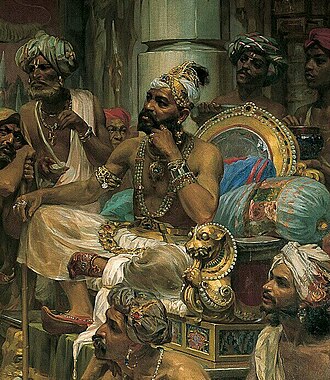
* What was ‘Kolathiri Raja’of Kochi for the Dutch East Co., and ‘Mir Jaffr’ of Murshidabad was for the British East India Co.
* What was ‘Samuthri Raja’ of Calicut for the Dutch VOC, ‘Jagat Shett’ of Murshidabad was for the British EIC
• Afonso de Albuquerque led the first Portuguese forces to successfully capture Goa in 1510 successfully. The Goa Inquisition (1560–1812), but Saint Francis Xavier arrived in Goa, India, on 6 May 1542.
• The Dutch East India Company (VOC) first arrived in northern Malabar (Kolathunadu) on 11 November 1604, led by Admiral Steven van der Hagen and with the Zamorin of Calicut. ( a corruption of the Malayalam word Samoothiri, which derived from Swami Thirumalpad (Lord of the Sea- from “Nair” lineage). They captured Quilon (1658) and Kochi (1663). King Marthanda Varma of Travancore defeated them on 10 August 1741.
• Captain William Hawkins landed at Surat on 24 August 1608, with the East India Co.
• Robert Clive, in June 1757, occupied Plassey, Murshidabad, with Mir Jafar and Jagat Shet.
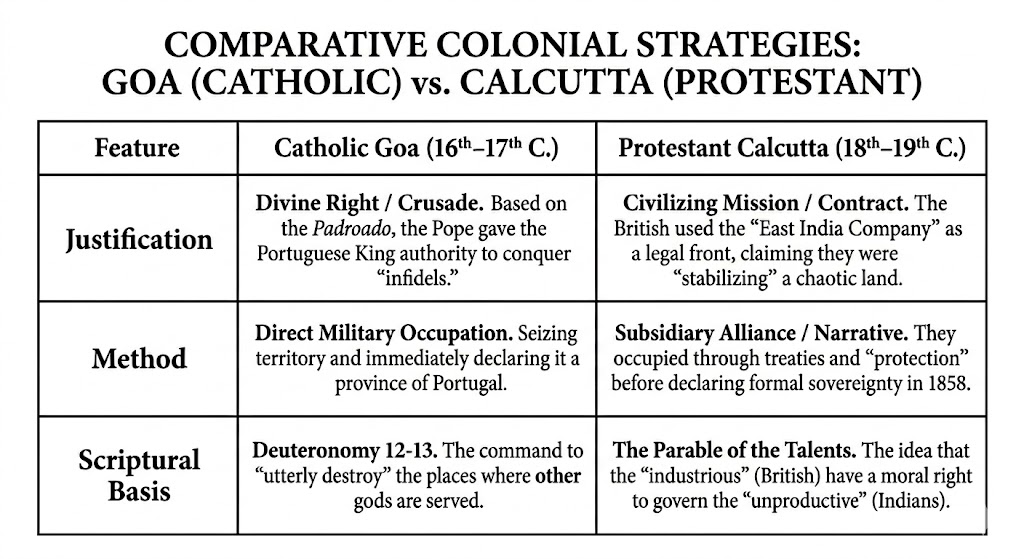
Historians know if all those representatives of the Son of God came to do business as sales and distribution agents of the APOSTOLIC SEE (whose foundation is attributed to one or more of the apostles of Jesus or to one of their close associates)
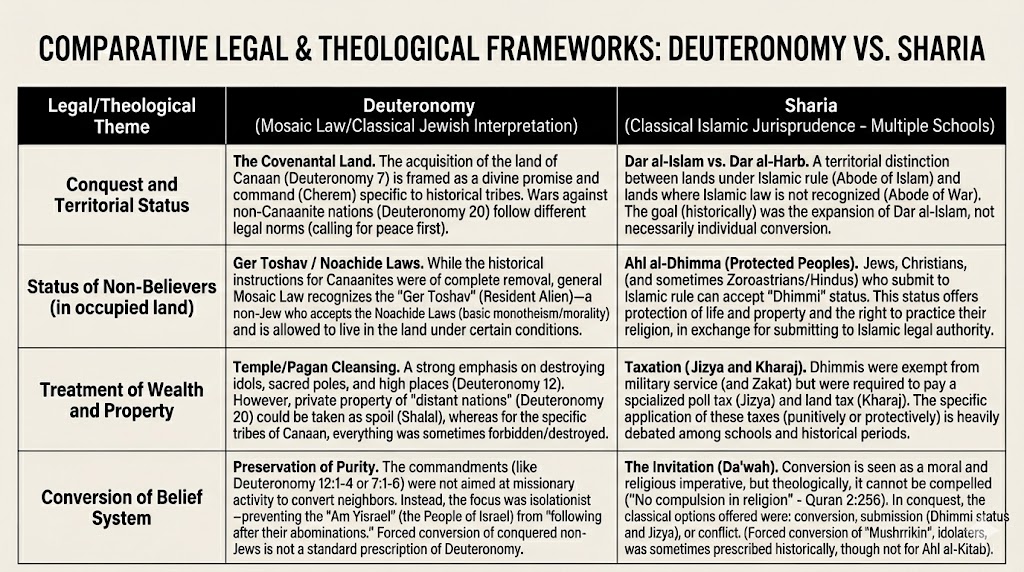
Specialists point to several areas where codes of Deuteronomy and Sharia mirror each other.
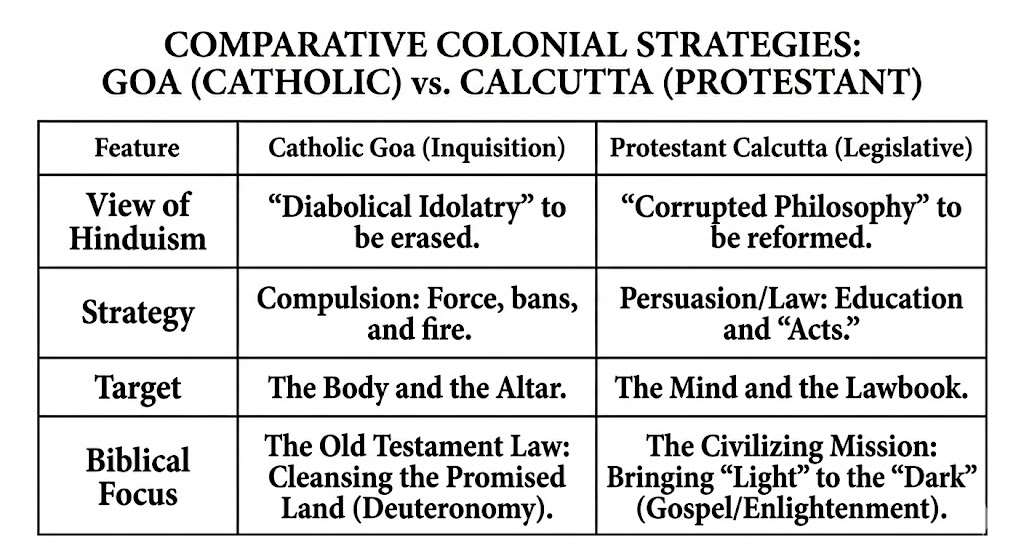
What was the Hindu Renaissance or Bengal Renaissance in Calcutta from the 18th to 20th century could also be defined as “Legislative Evangelism” if we compare with “the Council of Trent” and Catholic Inquisition that justified the “Padroado” in Goa, where “cleansing” the land of non-Christian rituals was seen as a biblical mandate.
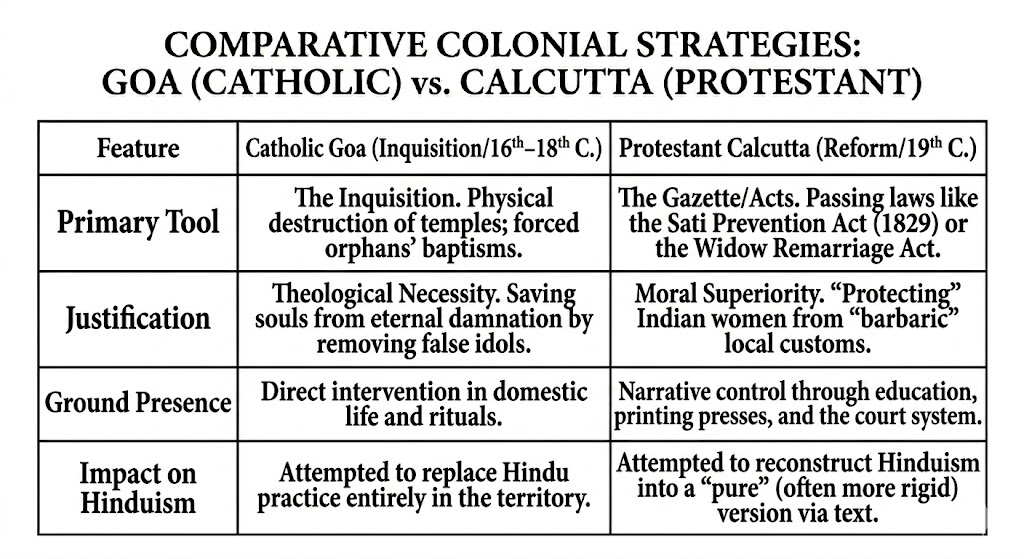
The British knew jolly well that what Catholic did at Goa was done pan -India by Sharia from 711 AD to 1757. Therefore, Protestants preferred sophisticated means of education via creative narration to bring centuries’ “wounded Sanatan Samaj” demonised to the level that suits Biblical Deuteronomy and Sharia nomenclatures.
Betrayal of ‘Kolathiri Raja’of Kochi facilitated the APOSTOLIC SEE and the Council of Trent in Goa, while that of Mir Jaffar and Jagat Shett brought Legislative Evangelism in Calcutta.
Narrative war began.
 subhasmitra.co.in